Hello, dear friend,
I hope you are well today.
The weeks are speeding by quickly. Many organizations are now doing year-end roundups and bonus calculations.
It often makes me wonder: at what cost? What are the hidden costs of these bonuses, vacations and new cars we will be looking at?
I was in a reflective group session this week, and the topic of burnout came up: how we recognize our own unique signatures and manage them before they become big.
Do you know yours, or are you still in denial? Telling yourself you can handle it when, in fact, you ain’t got natin’.
Our professional lives have become such an important part of our bigger lives that it can sometimes be difficult to know when we are doing too much.

For some people, being busy has become a way of life. There is always another task to complete, another message to answer, another deadline to meet, or another responsibility waiting.
Even when the body is tired, we often convince ourselves that we just need to push a little harder.
Look around you for a bit: who is calm and who is looking nervously powered. Who is rushing around like a hurricane, leaving everyone around them worse off, and who carries calm and peace?
Just notice….
Rest can begin to feel unnecessary. Taking a break can feel like wasting time. And slowing down can sometimes make us feel guilty. But our bodies do not always agree with the way we choose to live.
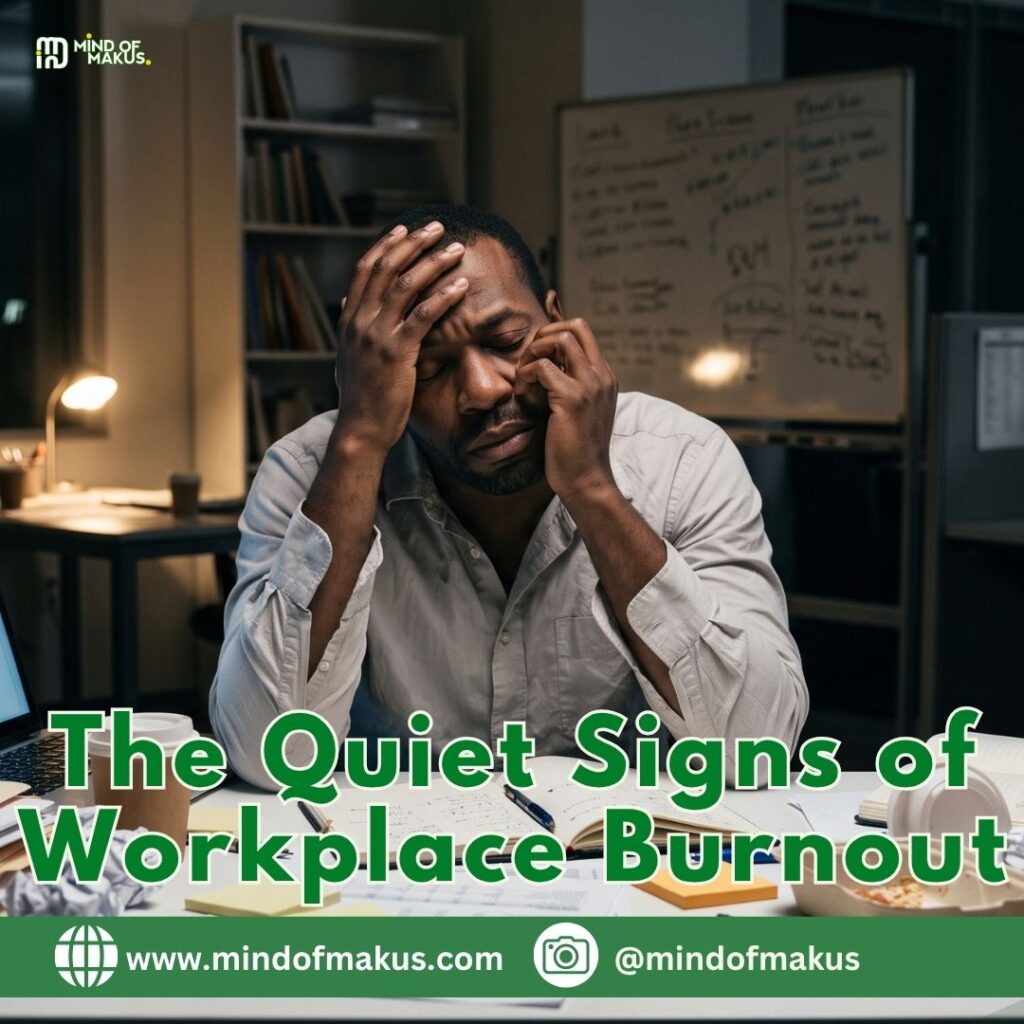
Sometimes, the constant tiredness, irritability, poor sleep, lack of concentration, or inability to relax may be signs that we have been carrying more stress than we realise, and truly it is necessary in some seasons, yet not so in others.
Do you know the difference? What do you do about this difference?
Your life rhythms may not look harmful from the outside. You may even enjoy what you do, but the way you feel before, during, and after work can tell you something important about how your work is affecting you.

The perpetually tired pigeon- is that you I see? Everything is such a stressor for you, even joyful events, even good news, even the laughter of children.
There is ordinary tiredness, and then there is the kind of exhaustion that seems to follow you everywhere.
You sleep, but you still wake up feeling drained. You look forward to the weekend, only to spend most of it recovering enough to face another week. Things that would normally take little effort suddenly feel like major tasks.
You have no hobbies, no time for a chat that is simply pleasurable, your shower is rushed, and even your food is eaten on the move.
Of course, tiredness can come from many things, and it does not automatically mean your job is the cause; many things may be contributing, including your closest relationships.
When exhaustion becomes a regular pattern and seems closely connected to your workload or working environment, it is worth paying attention.
Pay attention to how you feel before, after and during your activities, especially your work tasks.

Your body needs time to recover. If every available moment is being used to work, worry about work, or recover from work, there may not be enough space left for genuine rest.
You Find It Difficult to Switch Off After Work
One of the clearest signs that work may be taking too much from you is when you leave the workplace but cannot mentally leave the work behind.
- You close your laptop, but you are still thinking about the unfinished task.
- You get into bed, but your mind starts going through tomorrow’s schedule.
- You are having dinner with your family, but part of your attention is still on an email you received earlier.
Sometimes, you may even feel uncomfortable when you are not being productive. You check your phone repeatedly, respond to messages outside working hours, or feel that you should always be available.
Subscribe to My Newsletter
Over time, this constant state of alertness can make it difficult to truly relax. Having responsibilities is normal. Caring about your work is not a bad thing either. The concern begins when there is almost no mental space between your working life and your personal life.
Consider what will make up a full life for you; does it include moments when you are simply yourself, without constantly feeling like you are waiting for the next task, message, or problem?

Your Mood, Patience, and Relationships Are Changing
Sometimes, the first person to notice that work is affecting you may not be your employer. It may be the people closest to you.
Perhaps you have become more impatient than usual. Small things irritate you. You find yourself snapping at people over things that normally would not bother you.
You may also withdraw from conversations, avoid social activities, or have very little emotional energy left when you get home. This can be particularly difficult because you may not intend to treat people differently. You are simply exhausted.
When work takes so much emotional energy during the day, there may be very little left for your family, friends, relationships, or even yourself. There have been days when I had given so much of myself that I could barely get out of the car, much less engage in conversation with my family.
These are realities, but we are not powerless to control them.
Your Body and Sleep Are Beginning to Tell the Story
Stress does not always show up as an obvious feeling of anxiety. Sometimes, the body speaks first.
You may begin experiencing frequent headaches, muscle tension, stomach discomfort, difficulty concentrating, changes in appetite, or problems sleeping, difficulty shifting weight, irregular periods, acne breakouts, unspecified aches and pains.
These symptoms can have many different causes, so they should not automatically be attributed to your job. However, recurring physical or sleep changes deserve attention, particularly when they appear during periods of intense work pressure.
Our bodies need periods of recovery. When stress becomes constant, and there is little opportunity to slow down, it can become much harder to feel rested and settled. Sometimes, paying attention to these small changes early is better than waiting until you are completely overwhelmed.

You Feel Guilty Whenever You Rest or Take a Break
This is one of the signs we often overlook.
You finally have some free time, but instead of enjoying it, you feel guilty. If I had a coin for how many adults check in on their kids an inordinate number of times while out with other adults, I would have bought a farm by now. No, there is appropriate care, and then there is guilt care; know when it is ok to relax.
You tell yourself there is still something you should be doing. You feel uncomfortable watching a movie, spending time with your family, taking a nap, or simply sitting quietly because you think you should be productive.
You can Support My Work
Eventually, even rest begins to feel like another responsibility. But rest is not laziness.
You do not have to completely exhaust yourself before you are allowed to take a break. You do not have to prove that you have worked hard enough before you deserve time to breathe.
That culture of only sleeping when everyone has slept, eating when everyone has eaten, pacing around until your feet are dead. Stop it. There is no award for it; you will never be able to satisfy the hunger of guilt and shame. Set yourself free before you hurt yourself.
A healthy working life should have room for effort and recovery.

Recognising these signs does not necessarily mean you need to resign from your job immediately. Sometimes, what you need may be clearer boundaries, proper breaks, time away from work, a conversation about your workload, or support from someone you trust or a qualified professional.
What matters is that you do not ignore what your body and mind have been trying to communicate.
We call them quiet signs because they are often carried quietly within your heart, but you know. So honour your heart and take a positive action for your future self.
Your career is important. Your responsibilities are important. Your goals are important. But you are important too.
Working hard should not require you to lose yourself in the process. Sometimes, we all need a reminder that we are human and that our well-being deserves a place in the life we are working so hard to build.
Until next time — stay warm, stay growing, stay loving, stay whole.
With love and light
Amaka.