

Hello Dear Friend,
How are you? I hope you’ve had a good week.
I’ve been reflecting on a lot of things lately, but one thought has stayed with me more than the others. I wanted to share it with you and, as always, I’d love to hear what you think.
Lately, I’ve been paying close attention to how our relationship with ourselves is formed and how that relationship influences who we invite into our inner world. The more I observe, the more I realise that everything seems to begin with our sense of self, the stories we tell ourselves, and the conversations we have in the quiet moments when no one else is listening.
What has struck me most is how easy it is to overlook the way we speak to ourselves. We can be endlessly patient with others, quick to encourage them, generous with our compassion, and willing to extend grace when they make mistakes. Yet sometimes when we turn that same lens inward, we discover a very different voice.
There can come a moment of uncomfortable honesty when you realise that you are not nearly as kind to yourself as you are to everyone else. The encouragement you freely offer others is absent from your own inner dialogue. The understanding you give so generously is replaced by criticism, doubt, or impossible standards.
When that happens, it raises a challenging question: if kindness is something we truly value, why is it often the one thing we withhold from ourselves? Perhaps genuine self-compassion is not selfishness or self-indulgence. Perhaps it is integrity. It is allowing the kindness we offer the people we love to extend to ourselves as well.
After all, the relationship we carry with ourselves is the one relationship that accompanies us everywhere. Learning to nurture it may be one of the most important pieces of personal growth there is.
Chai!
As the year draws to a close, it is easy to find yourself taking inventory of everything you planned to do but didn’t. The goals you set in January. The habits you promised to build. The opportunities you thought you would pursue. The version of yourself you imagined becoming by December.
And somehow, instead of acknowledging how far you have come, you find yourself focusing on everything that didn’t happen.
- “I should have done better.”
- “I wasted so much time.”
- “Why am I still struggling with this?”
- “Everyone else seems to be making progress. What is wrong with me?”
Before you know it, reflecting on your year has turned into a conversation filled with blame, disappointment, and harsh judgment. But what if you could end the year differently? What if you could look at your unfinished goals without turning them into evidence against yourself?
Your Unmet Goals Are Not a Verdict on Your Life
There is a difference between acknowledging that you did not achieve something and deciding that you are a failure because you didn’t. One is an honest assessment of your experience. The other is an attack on your identity.
You may not have started that business. You may not have completed that course. You may not have developed the consistency you hoped for. You may have made decisions that slowed you down or spent time on things that did not serve you. YOU ARE STILL ALIVE!!!!!
These things can be acknowledged without concluding that you are lazy, incapable, unserious, or a disappointment.
An unmet goal is information. It is not a definition of who you are. You are allowed to have goals that remain unfinished without making yourself feel like an unfinished person. It also begs us to consider how we even make these goals, as we approach vision boarding season, be careful and mindful and spirit-led into it.

Remember That You Were Living, Not Just Achieving
Sometimes, when we review our year, we assess it as though the only meaningful things that happened were the things we deliberately planned. Remember that you did not pray for God to send Jesus for your sins. That happened without you.
But life does not always follow our plans.
Perhaps you spent more time caring for someone than you anticipated. Perhaps you experienced emotional difficulties that affected your ability to function. Perhaps you were learning to navigate responsibilities you had never handled before. Perhaps you were simply trying to survive a season that required more of you than you expected.
Subscribe to My Newsletter
Recently, there have been quite a few unexpectedly draining emotional events in my life, and I have had to realise that I must give myself the grace and the space to absorb them. This means that in this season, you won’t find me socially active or even as caring/service oriented as I would normally be.
I am learning that this in itself is a deliverance from being the people-pleasing person I used to be. I can care for myself better by withdrawing from the places where I was previously involved. Everyone will be ok.
Not every meaningful experience comes with a measurable achievement. Some years are about building. Some are about healing. Some are about learning to ask for help. Some are about discovering what no longer works for you.
And sometimes, the progress you made was simply finding the strength to keep showing up. That counts, too.

Stop Comparing Your January Expectations to Your December Reality
The person who made your goals at the beginning of the year was working with the information, energy, resources, and expectations available at the time. You have since lived through twelve months of experiences that may have changed your priorities, circumstances, or even your understanding of what you want.
It is okay to reconsider a goal. It is okay to outgrow something you once wanted. It is okay to admit that a particular dream requires more time, support, or preparation than you initially thought. Growth sometimes means having the courage to change direction, rather than forcing yourself to stay committed to a plan that no longer makes sense.
For a long time, I stayed stuck because of the sunk cost of the time, energy, and effort I had already invested. Deep down, I knew something wasn’t working, yet I struggled to move on. Over time, I’ve learned to shorten the gap between realisation and action. When I recognise that something needs to change, I try not to let inertia keep me standing still.
It’s not because I’m fearless. Far from it. Fear still shows up, but it no longer gets the final say. I’ve come to realise that even if a decision doesn’t work out as I hoped, it rarely means I have failed. More often, it means I have learned something new, gained clarity, or discovered a better path forward.
This mindset was shaped significantly by John C. Maxwell’s book, Failing Forward: Turning Mistakes into Stepping Stones for Success, which teaches that failure is not the opposite of success but often a necessary part of it. That idea was a revelation for me.
A similar theme appears in the thinking of Steven Bartlett, who often encourages people to approach life as a series of experiments. Rather than treating every decision as permanent or every setback as a verdict on our worth, he suggests we stay curious, learn quickly, and permit ourselves to pivot when new information emerges.
The goal is not to get everything right the first time, but to keep learning and moving forward. [obforum.com], [abforum.nl]
Perhaps that’s why one of the most liberating lessons I’ve learned is this: You do not have to punish your present self for not fulfilling every expectation your past self created.
Sometimes growth looks less like persistence and more like wisdom. It is recognising when a chapter has served its purpose, letting go without guilt, and having the courage to begin again

Reflect With Curiosity, Not Cruelty
Reflection is important. You do not have to pretend that everything went well or avoid taking responsibility for your choices. But you can ask yourself better questions.
A wise man once said; When you are learning, you ask more questions; you don’t necessarily get more answers, you just ask better questions. So go ahead and ask yourself some questions not to degrade yourself, but to expose where you may be able to allow more light into your consciousness and build skill
- Instead of asking, “Why am I such a failure?” Ask, “What made this goal difficult to pursue?”
- Instead of, “Why can’t I ever be consistent?” Ask, “What was happening in my life when I struggled to maintain this habit?”
- Instead of, “How did I waste another year?” Ask, “What did this year teach me about my priorities, limitations, and needs?”
- Instead of, “What is wrong with me?” Ask, “What kind of support, structure, or change would help me move forward?”
These questions do not excuse everything. They simply create room for understanding, accountability, and meaningful change. You cannot learn much from a conversation in which you are constantly defending yourself against your own attacks.
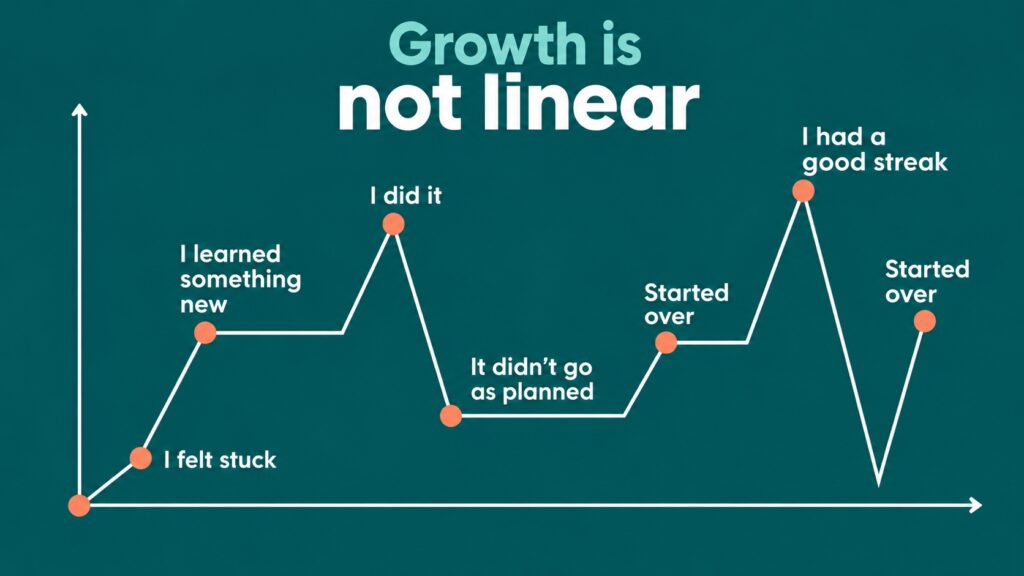
Celebrate the Progress You Almost Overlooked
When you are focused on unmet goals, your mind can become selective about the evidence it considers. You remember the project you abandoned but forget the difficult task you completed. You remember the habit you couldn’t sustain but overlook the times you made healthier choices. You remember the opportunity you missed but forget the courage it took to pursue another one.
Take some time to acknowledge the things that went right, even if they were not part of your original plan. Did you learn something new? Did you become more self-aware? Did you set a boundary you previously struggled with? Did you make a difficult decision? Did you ask for help? Did you try again after a disappointment?
These moments deserve recognition. Your year should not be evaluated only by the things you can put on a checklist, and if you love checklists, put the things you have become on them, what you learnt and what wisdom you have gathered as well.
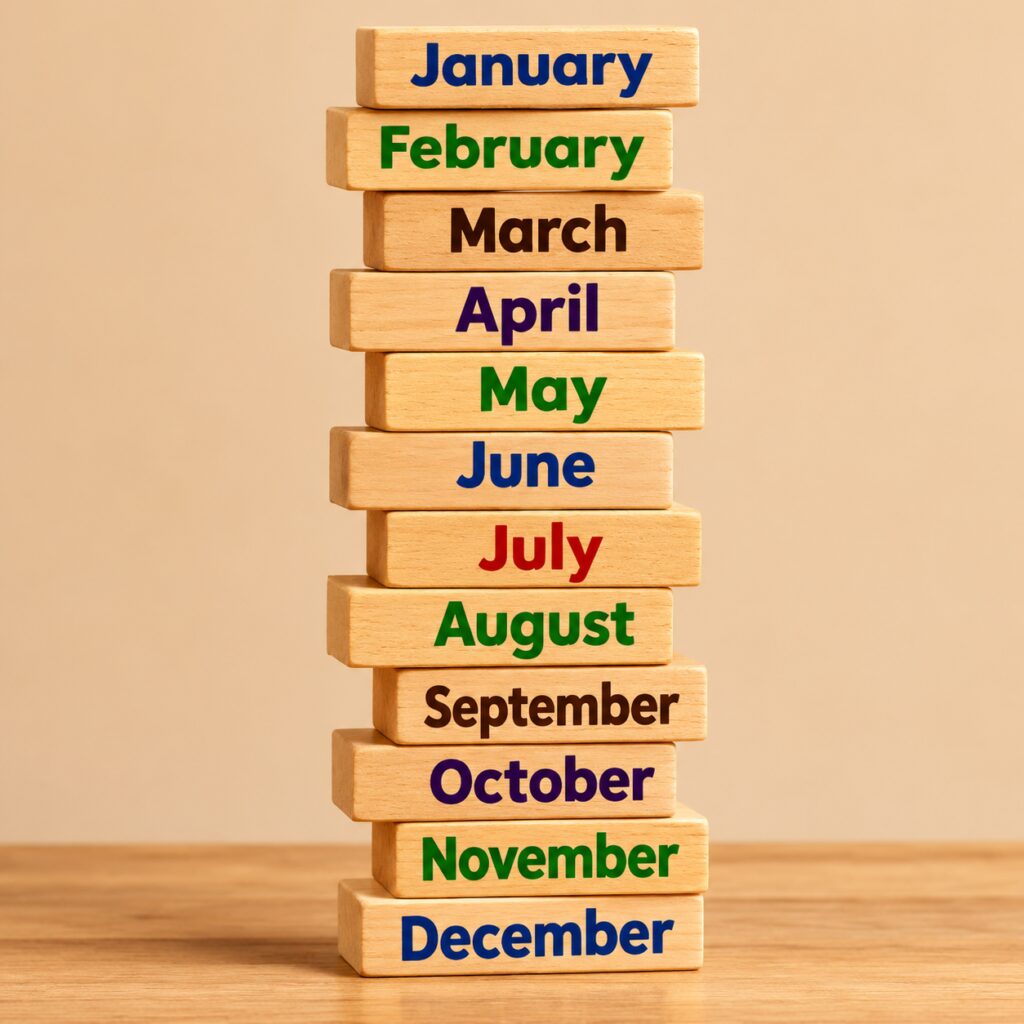
You Can Begin Again Without Waiting for January
There is something comforting about a new year. The fresh calendar, the renewed motivation, the feeling of possibility. But you do not need a new year to make a new decision. You can take one small step today, and this is no small thing to be dismissed. The promises we make to ourselves are quite important to keep because they tell you that YOU can be trusted.
You can revisit an abandoned goal this week. You can decide to approach something differently tomorrow. And if you need rest before you begin again, you are allowed to take it. The point is not to rush into another season of proving your worth through productivity. It is to create a healthier relationship with the person you are becoming.
Let your next chapter be guided by intention, not shame.
You can Support My Work
Permit Yourself to End the Year Gently
As you reflect on this year, remember that you are a human being, not a performance report. You can acknowledge your mistakes without humiliating yourself. You can take responsibility without withholding compassion. You can recognize the distance between where you are and where you want to be without despising the person standing in that distance.
Perhaps you did not achieve everything you hoped for this year. That is okay. You are still here. You are still learning. You are still capable of making different choices, receiving support, and finding new ways forward.
And you deserve to enter the next year without carrying the weight of unnecessary self-punishment. You can hold yourself accountable and still be kind to yourself. You do not have to hate who you are today to become someone you are proud of tomorrow.
Until next time — stay warm, stay growing, stay loving, stay whole.
With love and light
Amaka.