
Dear Friend,
How are you today? Hope you are now firmly enjoying the extra hour in the day and also packing away the summer baffs. Autumn is one of my favourite times of the year; the trees, the weather, the anticipation of Christmas, all make it perfect.
As a psychiatrist, I sit across from people every day who have mastered the art of “holding it together.” They are high-functioning, deeply responsible, and often the anchor for everyone else in their lives. Yet inside, they are running on empty.
The hair is done, the nails are done, the outfit is on point, the house is perfect!!! Yet one feels so scattered inside, almost like a small animal afraid of being found out by the monster.
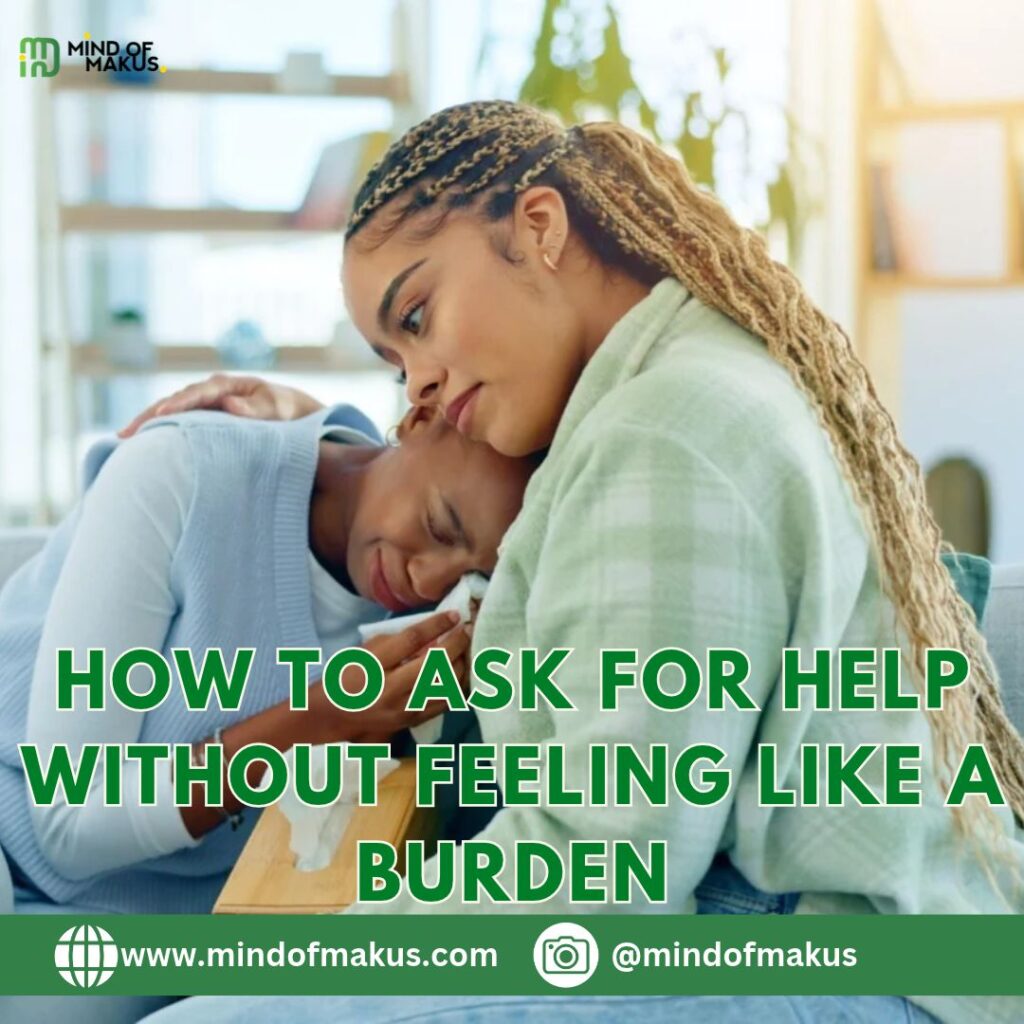
There is a particular kind of exhaustion that comes from trying to handle everything yourself. You may be having a difficult week, feeling overwhelmed by responsibilities, or quietly struggling with something you cannot quite explain. You know that reaching out to someone could make things a little easier, but somehow, asking for help feels harder than carrying the weight alone.

You begin to wonder if you are asking for too much. You worry that people might see you as needy, incapable, or demanding. You think about everything they already have going on, and before you know it, you’ve convinced yourself that the best thing to do is keep your struggles to yourself.
So you say, “I’m fine.” You figure it out alone. You keep showing up for other people—offering support when they need it, but hesitating when you need someone to lean on.
And perhaps the hardest part is that nobody knows how much you are carrying because you have become so good at hiding it. Oh my darling, you have become so good at acting that even you don’t know when you do it.
If this sounds familiar, you are not alone. But as a clinician, I want to share something crucial: learning to recognize your limits isn’t just a self-care skill—it is a vital marker of psychological self-awareness.

When “Just Tired” Becomes a Warning Sign
In my practice, I often remind patients that our minds and bodies communicate with us long before a crisis hits. We tend to ignore subtle shifts, convincing ourselves we just need another cup of coffee or a long weekend. But chronic stress and developing mental health conditions leave distinct footprints. I have noticed we often take our physical bodies for granted and assume they will go another day without the necessary maintenance.
It won’t.
Self-awareness means learning to spot these early warning signs before your tank is empty:
- Physical Signals of Chronic Stress
Persistent fatigue: Sleeping eight hours but still waking up exhausted.
Somatic complaints: Frequent tension headaches, tight shoulders, low libido, muscle aches, unexplained stomach issues, skin breakouts.
Sleep disruption: Falling asleep easily due to exhaustion, but waking up at 3:00 AM with racing thoughts—or struggling to turn your brain off at night. - Emotional and Cognitive Shifts
Irritability and a “short fuse”: Finding yourself unusually snappy, tearful, impatient, or overwhelmed by minor inconveniences that normally wouldn’t bother you.
Brain fog and indecision: Feeling like simple choices (like what to make for dinner) require immense mental effort, or leaving things until the last minute, then regretting it again and again.
Loss of joy (Anhedonia): Going through the motions of activities you usually enjoy, but feeling flat or detached.
Persistent dread: A pervasive, low-grade sense that something is about to go wrong, even when things are objectively quiet. It can become even more profound when good things are happening- that sense of foreboding. - Behavioural Changes
Withdrawal and isolation: Cancelling plans, ignoring text messages, or feeling like social interaction requires more energy than you possess.
Increased reliance on coping mechanisms: Reaching more frequently for alcohol, comfort food, doom-scrolling, or other distractions to numb out at the end of the day.
Over-functioning or hyper-independence: Throwing yourself into work or controlling minor details because your internal world feels out of control.
If several of these signs have been present for more than two weeks, your system is telling you that the current load is unsustainable. This is the moment to pause, reflect, and consider reaching out.
Subscribe to My Newsletter
Why Is Asking for Help So Difficult?
For some, asking for help is a simple thing. They identify what they need, reach out to someone they trust, and allow themselves to receive support. For others, the process comes with a thousand intrusive thoughts: What if I disturb them? What if they think I am weak? What if they help me today but resent me tomorrow?
Let us pause when we start to think like this, just notice what your own default excuse is for roughing things out alone. Notice.
These concerns can make even a small request feel like a significant emotional risk. In clinical settings, we often trace this hesitation back to a few common patterns:
You are used to being the strong one. You are the friend who listens, the family member who solves problems, or the colleague who steps in when everyone else is overwhelmed. Over time, being dependable becomes your identity. But being strong does not mean being endlessly capable.
You are allowed to have moments where you need a hand. You are afraid of rejection or vulnerability. Asking for help means admitting you need something from another person, which leaves you exposed. An experience where someone made you feel guilty for needing support can make it feel safer to never ask again.
Remind yourself: someone else’s inability to help is often a reflection of their bandwidth, not a judgment of your worth.
You do not want to inconvenience anyone. You care deeply about what others are going through, so you try not to add to their worries. However, there is a difference between respecting someone’s capacity and assuming you are automatically a burden. You don’t have to decide on someone else’s behalf before giving them a chance to show up for you.
You believe you must earn the right to receive support. You might feel comfortable receiving help only when you have done enough for the other person or reached absolute rock bottom. But healthy relationships are not transactional. You do not have to perform, achieve, or exhaust yourself before you are worthy of kindness.
I remember hearing this from someone I met recently; it made me sad. I realise quite a few people make help a transactional thing, and it wasn’t so from the beginning. Humans have gone too far from what God established.
How to Ask for Support in Daily Life
You do not have to become completely comfortable with vulnerability overnight. You can start with small, intentional adjustments:
- Challenge the “burden” narrative: If a friend came to you with the same problem, would you consider them a burden? Probably not. Extend that same compassion to yourself.
- Start small: Ask a colleague to clarify a task, ask a friend to listen while you talk through a tough day, or ask a family member to help with an errand.
- Be clear about what you need: Differentiate between needing emotional space to vent versus practical assistance. Saying, “I’m having a hard week and just need to vent—do you have 10 minutes to listen?” helps the other person understand how best to support you.
- Give people room to say no: Asking with zero pressure (“No worries at all if you don’t have the bandwidth right now”) protects both your boundaries and theirs.
- Stop over-apologizing: Replace “I’m so sorry to bother you with my problems” with “I really appreciate you taking the time to listen.”

Knowing When Daily Stress Crosses into Clinical Need
Self-awareness also means recognizing when peer support isn’t quite enough. There is a difference between going through a stressful season and experiencing a clinical mental health condition like major depression, an anxiety disorder, or burnout.
I watched a video recently where an Olympic swimmer was swimming with regular everyday swimmers in a competing pool; they all had a long head start. He didn’t get into the pool until they were halfway to the end.
He won!
Your best friend, your mum, your partner, your dad, your sibling…. Is not your therapist! It may be time to consult a doctor, psychiatrist, or therapist if:
- The warning signs are persistent: Symptoms persist daily for two weeks or more without relief.
- Functioning is impaired: It is becoming difficult to perform at work, manage household tasks, or maintain basic self-care.
- You feel trapped or hopeless: You feel a sense of despair, or thoughts that people would be better off without you. (Note: If you are experiencing thoughts of self-harm, please reach out to a crisis line or professional immediately.)
- Your physical health is declining: Severe shifts in appetite, weight, or chronic sleep deprivation are taking a physical toll.

Seeking professional psychiatric or therapeutic care is not a sign that you have failed to manage your life. It is simply bringing in the right tool for the job. Just as you wouldn’t expect yourself to set a broken bone without a doctor, you shouldn’t expect yourself to navigate deep emotional or neurochemical shifts entirely on your own.
What an act of mercy that we have the option to even find that help.
You Are Not a Burden for Being Human
We often celebrate independence as though it means managing every aspect of life without assistance. But independence becomes exhausting when it leaves no room for genuine human connection.
You were never meant to be endlessly available to others while denying yourself the same consideration. Allowing someone to help you isn’t a sign of weakness—it creates space for deeper, more authentic relationships where care moves in both directions.
You can Support My Work
Final Thought
The next time you find yourself about to say, “It’s fine, I’ll handle it,” pause. Take a breath. Acknowledge what you are carrying, and permit yourself to reach out.
You do not have to wait until you are completely broken to deserve support. You are allowed to have needs, and you are worthy of care simply because you are human. You are so loved, my dear friend.
Until next time — stay warm, stay growing, stay loving, stay whole.
With love and light
Amaka.