
Hello, dear friend,
I hope you are well today. How are things going for you this week? I have had quite a week, but I have also overcome quite a few things that could have kept me down, so on balance, fantastic.
I am working out again, and I can see beauty again in the small things; these are my wins for this week. I am long overdue for a garden centre haul and some good old hard work in the dirt. I shall rectify this fault. The husband owes me one of these.
Recently I have had trouble sleeping well; sleep being one of the pillars of good health, that’s not a good thing, so I have been actively working on my sleep. One of the things I have found that keeps me up is anxiety about things I have no control over.
Let’s get into it.
That feeling of being tired at 4 pm and you finally get to bed at 9 pm and …… The moment you lie down to sleep, your mind suddenly becomes active?
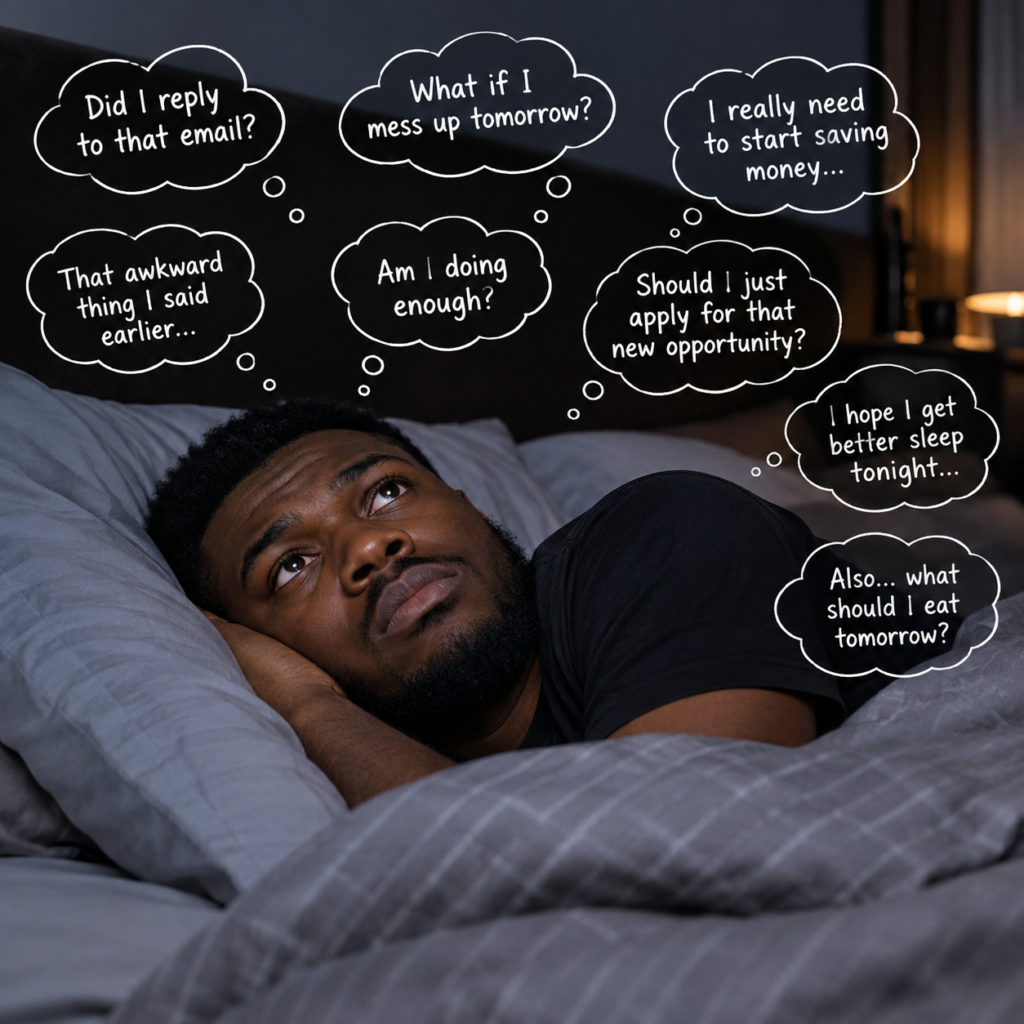
You take careful time to think about the conversation you had earlier, the work you have not finished, the bills waiting to be paid, or the things you wish you had handled differently. Sometimes, the niggle nags you until you give up and get out of bed and start doing household tasks just to keep busy. Sigh!
You are tired, but your mind does not seem ready to rest.
This is an experience many people have with nighttime anxiety. Although anxiety can happen at any time of the day, nighttime can make it feel more intense. The quiet removes some of the distractions that keep us occupied during the day, leaving us alone with thoughts and feelings we may not have had the time or space to process.
Understanding why this happens can help you respond with greater patience, rather than becoming frustrated with yourself for struggling to sleep.
Nighttime anxiety does not always have one specific cause. It can develop from a combination of stress, thought patterns, sleep difficulties, and the way we respond to uncertainty. Anxiety is simply what happens to us when we can’t deal with uncertainty in a healthy way, and it impacts us negatively.
It can be worse at night because:
1. The distractions of the day disappear: During the day, your attention is divided between work, family, conversations, responsibilities, and everyday activities. Even when you feel stressed, there may be little time to stop and acknowledge it. At night, many of these distractions disappear.
The unanswered message, the difficult decision, the financial concern, or the conversation you have been avoiding may suddenly occupy your attention. Thoughts that were pushed aside during the day can feel much louder when everything becomes quiet.
This does not necessarily mean your problems have become bigger. You may simply have more mental space to notice them.
2. Your mind begins trying to solve tomorrow: The anxious mind is great at anticipating what might happen. Your mind may attempt to prepare for every possible outcome, especially when something feels uncertain.
You might think about an upcoming presentation, an important conversation, a family concern, or a responsibility you are unsure how to handle. One thought can quickly lead to another.
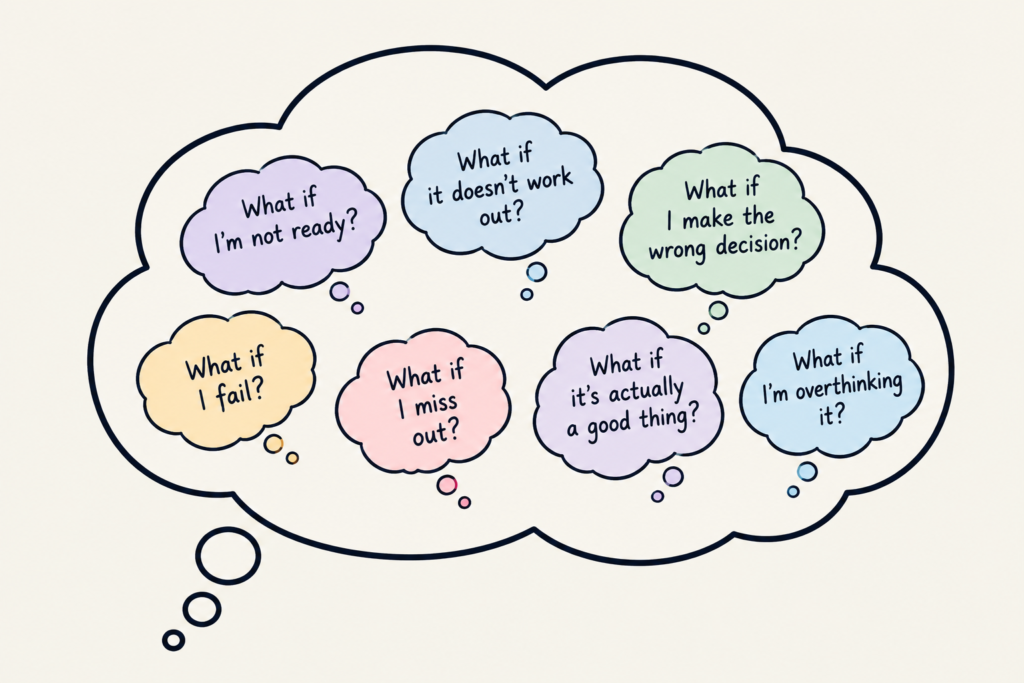
What if it goes wrong? What if I am not prepared? What if I cannot handle it?
Although this mental activity may feel like preparation, repeatedly imagining worst-case scenarios can increase distress without helping you find a practical solution. There is a difference between planning for tomorrow and mentally living through every possible difficulty before tomorrow arrives.

3. Your body is tired, but your mind is still alert; Stress can keep the body in a state of heightened alertness. You may notice a racing heartbeat, muscle tension, restlessness, difficulty relaxing, or midnight snacking.
When you are already worried, these physical sensations can become another source of concern. You may begin wondering why you cannot relax or why sleep is taking so long.
That concern can create a cycle: anxiety makes it harder to sleep, and difficulty sleeping makes the anxiety feel more difficult to manage. Poor sleep can also affect your mood, concentration, and ability to cope with stress the following day. A cycle that needs to be interrupted.
4. Quiet can make difficult emotions easier to notice: Not every anxious night begins with a specific fear about the future. Sometimes, it is connected to loneliness, disappointment, grief, uncertainty, or emotional exhaustion.
You may have spent the day showing up for other people, completing responsibilities, or pretending that everything is fine. When the day ends, the feelings you have been carrying may become harder to ignore.
For some people, nighttime is the first opportunity to recognise that something has been bothering them. These feelings deserve attention, but you do not have to understand or resolve every one of them before you are allowed to rest.
Subscribe to My Newsletter
5. You begin worrying about the anxiety itself: After experiencing several difficult nights, bedtime can start to feel like something to fear. You might begin thinking, What if I cannot sleep again tonight? What if my mind starts racing? What if I feel anxious as soon as I lie down?
This creates additional pressure around sleep. So you start taking some sedatives, another avoidance measure of the real issues keeping you awake. Instead of allowing yourself to rest, you may begin monitoring every thought and sensation, checking whether you feel calm enough to fall asleep.
Unfortunately, sleep is not something we can force through sheer effort. Trying harder to sleep can sometimes make the experience more frustrating.

How to Respond on Difficult Nights
You may not be able to prevent every anxious thought, but you can change how you respond when it arrives. The goal is not to force your mind to become completely silent. It is to help yourself feel safe enough in the present moment without needing to solve everything immediately, and no, it doesn’t happen by wishful thinking; you learn how to do it, how to listen to yourself, and how to respectfully reassure yourself enough so you can sleep better over time.
1. Acknowledge what you are experiencing: When anxiety appears, your first instinct may be to fight it, criticise yourself, or desperately search for a reason. Instead, pause and acknowledge what is happening.
You might say to yourself:
“I am feeling anxious right now. My mind is thinking about several things, but I do not have to figure everything out tonight.”
This simple recognition can help you create some distance between yourself and your thoughts.
Remember, experiencing an anxious thought does not automatically mean that something bad is about to happen. A thought can feel convincing without being a prediction of the future. It can be overwhelming and can sometimes force you into replying to a text, sending an email, popping open that laptop that was shut down, etc. Stop!
You can acknowledge a feeling without treating every fear it produces as a fact.
2. Bring your attention back to the present: Anxiety often pulls your attention towards the future or back into the past. Grounding techniques can help you reconnect with what is happening around you now. Try a simple exercise:
- Notice five things you can see.
- Identify four things you can physically feel, such as the bedsheet against your skin or your feet resting on the mattress.
- Listen for three sounds around you.
- Notice two smells, if you can.
- Identify one taste or simply notice the feeling of breathing.
I put together a document years ago that helps people practice the above grounding exercise. Check it out here
You do not need to complete the exercise perfectly. The purpose is to gently redirect your attention rather than force yourself to stop thinking. You can also try breathing slowly and comfortably, allowing your exhalation to be slightly longer than your inhalation. Do not force deep breaths; return to your normal breathing if you feel uncomfortable.
3. Give your worries somewhere to go: Sometimes, anxious thoughts keep returning because you are afraid of forgetting something important or because a problem genuinely needs your attention. Keep a notebook beside your bed and write down what is on your mind. You could divide the page into two sections:
- What is worrying me?
- Write down the concerns without judging yourself for having them.
- What can I do about it tomorrow?
- Identify one small, realistic action for concerns you can address. If something is outside your control, acknowledge that you may not have an answer tonight.
For example, instead of repeatedly thinking, “I have too much work to do,” you could write, “Tomorrow morning, I will identify the three most important tasks and start with the first one.” Once you have recorded the thought, remind yourself that you have given it a place to be revisited. Not every problem requires a solution before bedtime.
I particularly love this one as it allows you to take action on something and let it rest

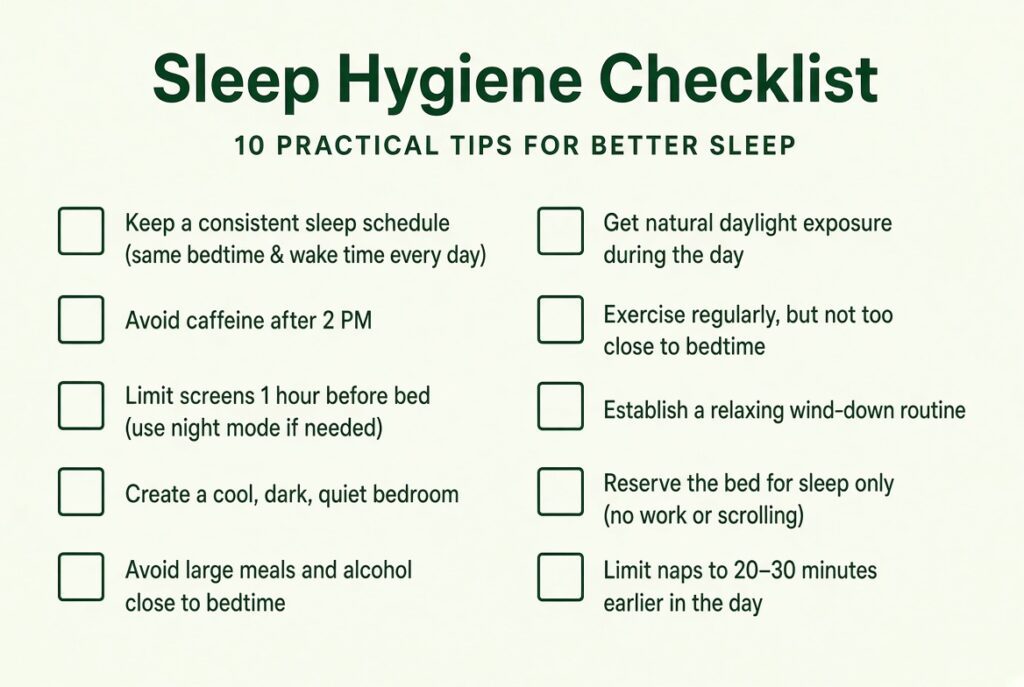
4. Create a gentle transition into sleep: Going directly from a demanding day to bed can make it difficult to settle, particularly when your mind is still occupied with responsibilities. A simple evening routine can help signal that the day is coming to an end. I like to call this sleep hygiene, very much like you do with a dental hygiene routine.
Your winding down must be obvious to you and your environment. You might try:
- Reducing stimulating screen use before bedtime.
- Dimming the lights and choosing a quiet activity, such as reading.
- Preparing your clothes or writing a short plan for the next day.
- Avoiding caffeine late in the day if it affects your sleep; stop after noon/lunch if you can help it. Some people say having a milky drink helps instead. Some Chamomile tea maybe?
- Keeping a reasonably consistent sleep and wake-up schedule. Use alarms for both.
- Making your sleeping environment comfortable and quiet where possible. Colours, scents and tones that help you feel safe and fabrics that don’t irritate you.
- A warm bath an hour before bed really helps to reset your nervous system; don’t knock it, just try it.
Your routine does not need to be elaborate. The most helpful routine is one that fits your life and feels manageable enough to repeat. You are not trying to create a perfect night. You are creating a little space between the demands of the day and the rest your body needs.
5. Stop treating sleep as a task you must complete: When sleep does not come quickly, it is easy to become frustrated. You check the time, calculate how many hours remain before morning, and worry about how tired you will feel the next day. This can make bedtime feel like another responsibility you are failing to complete.
Try changing the expectation. Instead of telling yourself, “I must fall asleep now,” consider saying, “I am going to allow myself to rest, even if sleep takes a little time.”
If you find yourself lying awake and becoming increasingly frustrated, get out of bed for a little while. Sit somewhere comfortable with dim lighting and do something quiet like sewing, knitting, reading a book, or folding laundry, then return when you feel sleepy.
The idea is to reduce the pressure associated with being in bed, rather than forcing sleep to happen.
6. Be careful about how you interpret nighttime thoughts: Thoughts can feel more urgent when you are tired or emotionally overwhelmed. A small mistake may seem like a major failure. An uncertain situation may feel certain to end badly. A difficult conversation may become evidence, in your mind, that a relationship is falling apart.
When this happens, try asking yourself and writing it all down:
- What do I know for certain?
- What am I assuming or imagining?
- Is there another reasonable way to understand this situation?
- Does this need immediate action, or can it wait until I have rested?
You do not have to replace every negative thought with a positive one. Sometimes, a balanced thought is more helpful.
For example: “I do not know how tomorrow will go, but I can prepare for what is within my control.” This allows room for uncertainty without assuming the worst.
What If You Keep Experiencing Night-Time Anxiety?
Occasional anxious nights are common, especially during periods of change, pressure, or uncertainty. However, you do not have to dismiss persistent anxiety as something you simply need to endure. This can lead to long-term health problems if it’s not attended to.
Anxiety is a sign there is something that needs attending to; don’t ignore it, dear friend.
I always say if you have tried all these and it hasn’t helped, don’t give up; consider speaking with a qualified healthcare or mental health professional.
They can help you understand what may be contributing to your symptoms and explore appropriate support, including psychological therapies such as cognitive behavioural therapy when suitable.
It is also worth seeking medical advice if you experience new, severe, or unusual physical symptoms rather than automatically assuming they are caused by anxiety.
In the meantime, pay attention to patterns. Notice whether your anxiety is connected to particular worries, caffeine, irregular sleep, relationships, stressful events, or other changes in your routine. You do not need to monitor yourself obsessively; a few simple observations may help you identify what support would be useful.

You Do Not Have to Solve Your Whole Life Before You Sleep
There is something about the end of the day that can make unfinished things feel especially heavy.
You can acknowledge that something is difficult without requiring yourself to work through every emotion tonight.
Rest does not mean that you are ignoring your responsibilities. It means recognising that you are human, and that your ability to cope is supported by sleep, patience, and care.
When anxiety visits at night, try not to turn the experience into another reason to criticise yourself. Meet it with curiosity. Give your thoughts somewhere to go. Return to the present. Take one manageable step when a step is needed, and allow the rest to wait.
You may not be able to control every thought that enters your mind, but you can learn to respond to those thoughts with greater gentleness.
Sometimes, a helpful reminder before sleep is simply this:
“I have done what I can for today. I do not need to have every answer tonight. For now, I am allowed to rest.”
You can Support My Work
A Gentle Reflection
If nighttime has been difficult for you lately, take a moment to ask yourself:
What am I carrying into the night that I might need to acknowledge, address, or permit myself to leave until tomorrow?
You do not have to find a perfect answer. Begin with honesty, give yourself room to breathe, and remember that you deserve care even on the nights when your mind feels particularly busy.