Hello, dear friend,
In the last 5 months, there have been many changes in my life that have changed the structure of what formed by daily rhythms and more recently there was been an almost unbearable loss, but I am here, standing, sure more than ever in my conviction that God is faithful and what he does is good.
There have been moments of reflection and deep introspection, I have wondered if I was normal and what normal even was.
I am grieving the dead but also grieving the living because of life transitions and changes that are not so easy to adjust to when you get older.
The Royal College of Psychiatrists (RCPsych) defines abnormal (or complicated/prolonged) grief as a bereavement reaction that is out of proportion to or inconsistent with cultural, religious, or age-appropriate norms, and persists intensely over an extended period—typically exceeding 6 to 12 months—causing significant impairment in daily, social, or occupational functioning
What makes grieving normal and what makes it abnormal? From the above definition, time. Time is what shapes what your grief is called so it means that what we call grief is normal mostly until time passes.
Yet there is so much awkwardness around grief….. So much silence and people not know how to feel, do or think.
So Aunty Dums is gone.
Rest in Peace resilient one

Read all about her here you might learn 10 or 30 things.
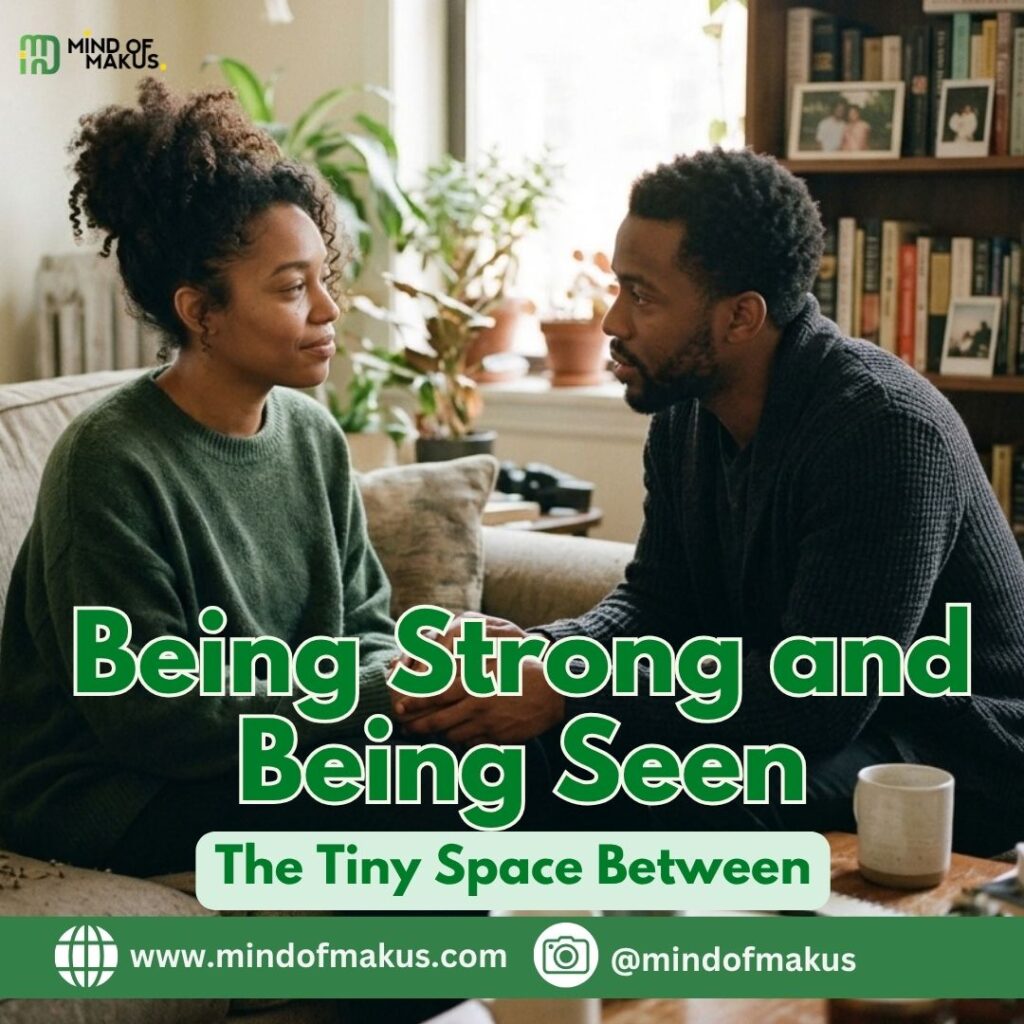
At times like this, we all value having someone or people, in our lives who notice when our energy subtly shifts—a friend, partner, or colleague who picks up on a quiet sigh or an unusual silence and asks how we are really doing. We long for relationships where saying, “I’m having a difficult day,” comes naturally, free from the quiet sting of guilt. Those relationships where your silence doesn’t need interpretation and your “I am fine” is actively heard for all the unfine things it carries.
Yet, so many of us default to “I’m fine” out of habit or a desire not to burden others.

Why We Tend to Carry It Alone
Here is so much work that has been done to support the experience of living and the fact that human beings are wired for connection. A landmark meta-analysis showed that lacking strong social connection carries a health risk comparable to smoking up to 15 cigarettes a day. Prolonged emotional isolation doesn’t just feel heavy; it places a measurable strain on our mental and physical well-being.
In my work life everyday I talk to people about establishing connections and community around them as part of a wholesome recovery from illness. There are many government programmes established to support these too.
Why, then, is asking for support so difficult?
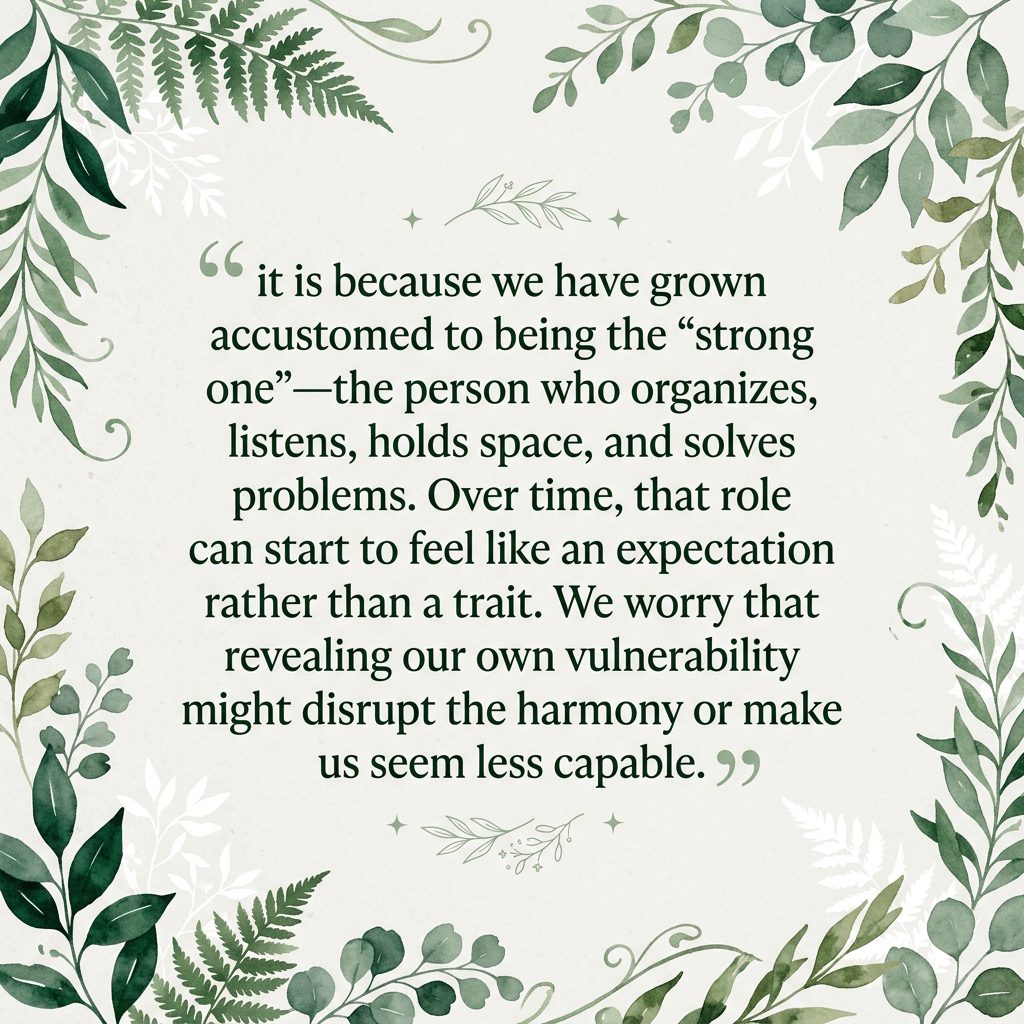
Often, it is because we have grown accustomed to being the “strong one”—the person who organizes, listens, holds space, and solves problems. Over time, that role can start to feel like an expectation rather than a trait. We worry that revealing our own vulnerability might disrupt the harmony or make us seem less capable.
On days where we start to think like this, understand that thoughts come and go, they are merely suggestions and not all of them are truths.
Letting People In
Sometimes, the people who care about us want to support us, but they simply don’t know we need them. They may assume that because we usually handle things well, we don’t require extra care right now.
Giving people an opportunity to support you doesn’t require a dramatic reveal or a complete breakdown of boundaries. It starts with small, clear invitations that allow others to see where you are. Instead of falling back on “I’m fine,” try using simple, direct statements:
- “I’ve actually had a surprisingly difficult week.”
- “I don’t need any solutions or advice right now—I just need someone to listen.”
- “Could you check in on me sometime later this week?”
- “I could really use some company today, even if we just sit quietly.”
These small statements create room for genuine human connection. You don’t have to explain every nuance of what you are feeling, nor do you have to have it all figured out before you reach out. You can simply let someone know that you are struggling.
Subscribe to My Newsletter
And when someone responds with warmth and care, try to accept it without feeling the need to immediately downplay your experience or feel like you need to pay it back on a tight deadline. Trust that they will also benefit from helping you out and will find help when they need it, it doesn’t have to be you.

Rethinking What Strength Really Means
Strength is not measured by how much you can endure alone. It is knowing when to set something down and trusting others to help you carry it.
The goal of emotional openness is not to become less strong or resilient; it is to unpack the belief that strength requires relentless endurance at the risk of even harming self.
Even the most dependable people need a safe place to land. The person who encourages everyone else still needs encouragement. The person who holds space for others deserves to have space held for them. Being perceived as capable should never mean disappearing emotionally.
Allow yourself to be human. Allow yourself to need other people. Give yourself permission to have days when you don’t have all the answers, and let yourself rest without interpreting that rest as a personal failure.
Assess your situation honestly, there is no doing anything you can’t be honest with yourself. Pause and think for a second.
Mindfully engage with the questions below.
A Reflection for You
Take a moment to pause and consider your own social circles:
- When was the last time you told someone you trust that you were having a hard day?
- Is there a relationship in your life where you could swap “I’m fine” for a slightly more open answer this week?
You don’t have to carry everything by yourself. Sometimes, the most meaningful step toward deeper connection is simply letting someone know you need them.
You can Support My Work
So, to answer your question.
“Amaka, How are you?” —” I am not fine, but it’s normal and it will pass with God’s help, I will be fine”.
Until next time — stay warm, stay growing, stay loving, stay whole.
With love and light
Amaka.