
Hello dear friend,
I hope you are well today.
What comes to your mind when you think about children and their emotions?
Their really dramatic displays of emotions or maybe even their lack of emotions in the strangest circumstances.
As a child, I felt feelings, but I didn’t even recognise them, whether good or bad.
However, things are changing around us every day; my kids have way more awareness than I ever had in the first 2 decades of my own life.
Phew!
So when we run into the dragon in the house called our emotions, we will certainly all react differently. With most things I consider here, I often go from the back to the front.
Who do I want my children to become in society? What role do I expect them to play? Am I empowering them for that?
So as we consider the landmine of emotions that flow through a family home, let’s think about THE KIDS today.
They are not an inconvenience, nor a side effect of food or bad sex; they are real stakeholders in the organisation that is our family, and we cannot feign ignorance about how best to support them as they mature emotionally.

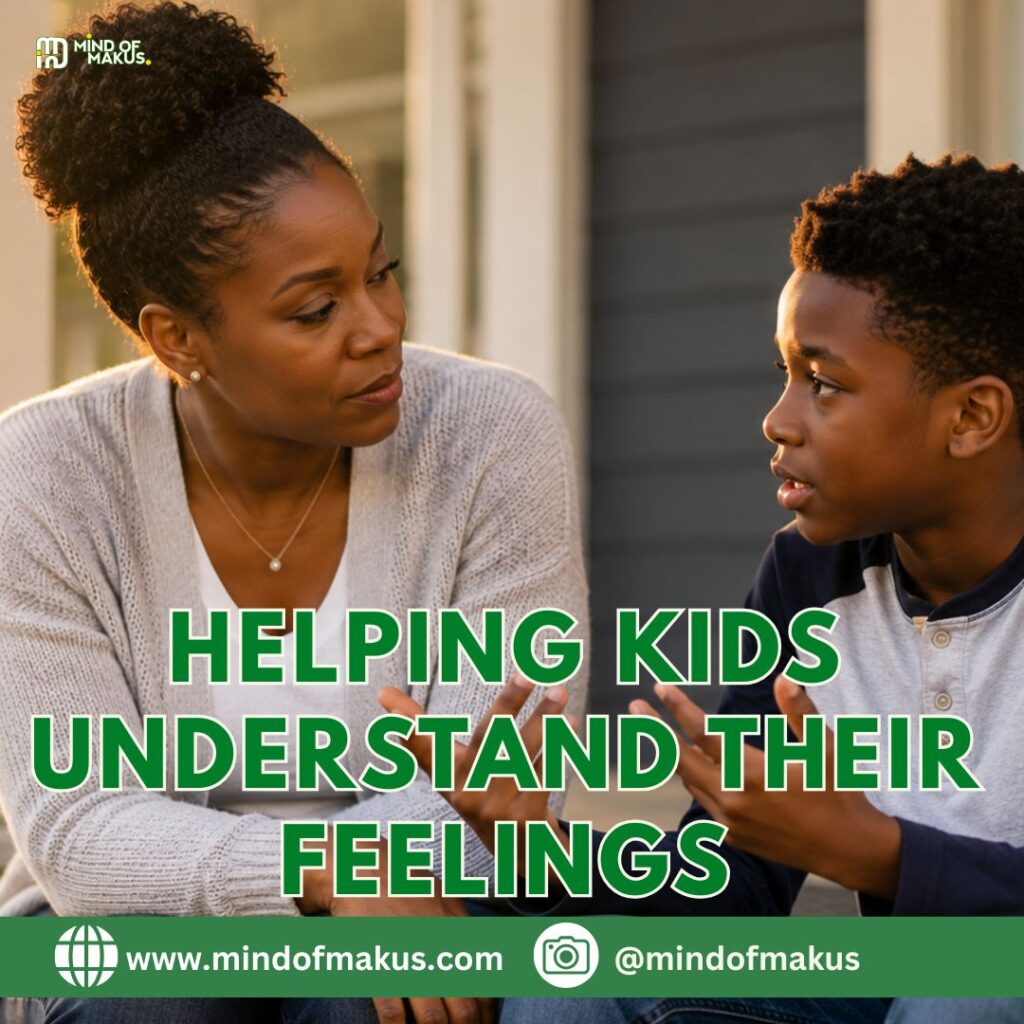
How do you engage them in conversation?
You might ask questions such as:
- “Did that make you feel disappointed?”
- “Who was nice to you today in school?”
- “Were you feeling nervous before the test?”
- “What was the most exciting thing about the party today?”
- “Did your friend’s words hurt your feelings?”
Little by little, children begin to understand themselves better. Children who understand themselves are often better equipped to communicate with others.
Listen Before You Try to Fix
As parents and caregivers, our instinct is to solve problems. We want to wipe away every tear, remove every obstacle, and make everything better as quickly as possible.
But children don’t always need immediate solutions.
Sometimes they simply need someone willing to sit beside them and listen or just give them the safety necessary to launch out on the next adventure.
When a child knows they won’t be interrupted, corrected, or dismissed, they become more willing to share what is really going on inside.
Often, the greatest comfort isn’t having all the answers; it’s knowing someone truly understands.
Subscribe to My Newsletter
Children should never grow up believing that going through difficulties means they are weak.
Just as we visit a doctor when our body is sick, there are times when our minds and emotions need extra care too.
If your child ever needs to speak with a counsellor, therapist, or another trusted professional, present it as something positive rather than something to fear.
Our thoughts very quickly become our reality, and we often perceive things first and then superimpose our meaning onto the neutral reality for good or bad.
Seeking help is not admitting defeat. It is choosing healing actively and not outsourcing it to people who have to live or work with us. It is a noble thing to be self-aware and to understand strengths, weaknesses, and learning gaps.
When children learn this lesson early, they are more likely to seek support throughout their lives rather than carry their burdens alone.

When to Seek Extra Support
Every child experiences difficult emotions from time to time. Feeling sad after a disappointment or nervous before a big event is a normal part of growing up.
However, if your child seems withdrawn for an extended period, has intense emotional outbursts that affect daily life, loses interest in activities they once enjoyed, or shows significant changes in sleep, appetite, or behaviour, it may be time to seek guidance from a qualified mental health professional.
You can Support My Work
Reaching out for support isn’t a sign that you’ve failed as a parent. It’s another way of caring for your child. It is proving to them that you see them and you are committed to ensuring that they get positive outcomes no matter the challenges they face.
Our strongest message for the next generation will not be what we say; it will be in what we do and decline doing.

Final Thoughts
Children don’t need parents who always have the perfect answers.
They need adults who create safe spaces for honest conversations.
They need to know that sadness isn’t weakness, worry isn’t something to hide, and asking for help is one of the bravest things a person can do.
When we teach children to understand their feelings instead of fearing them, we give them something that will serve them for the rest of their lives.
Long after they’ve forgotten our lectures, they’ll remember how we made them feel—heard, accepted, and deeply loved.
How can we teach something that we fear, though? Sort of work out your own emotions, my dear friend. Do it for yourself and then for them.
Until next time — stay warm, stay growing, stay loving, stay whole.
With love and light,
Amaka.