Hello, dear friend,
I hope you are well.
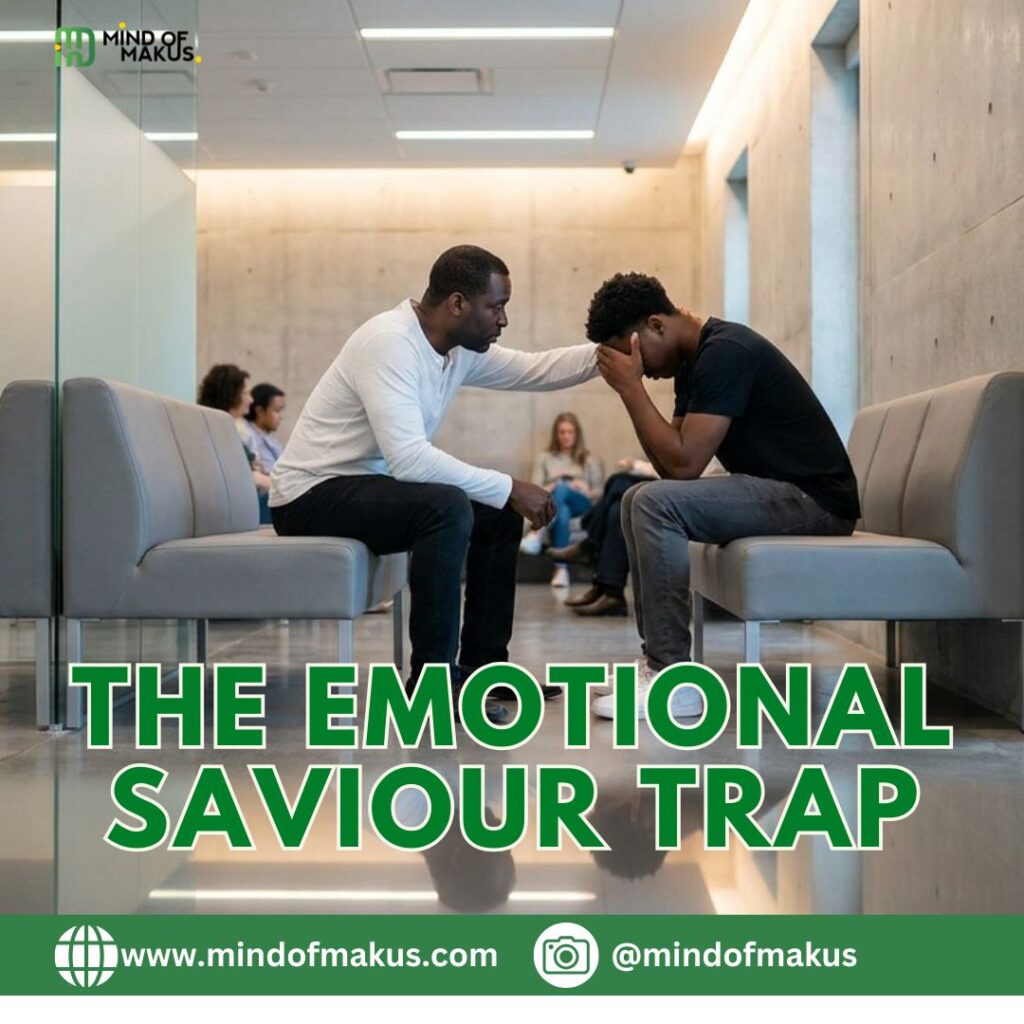
There is something deeply human about wanting to protect the people we love from pain. When someone close to us struggles with anxiety, our instinct is to step in, fix things, calm every fear, and carry the emotional weight for them. We answer late-night calls, offer endless reassurance, and try our absolute best to make the world feel safe.

But somewhere between caring and constantly rescuing, a quiet shift happens. We become emotionally overwhelmed ourselves.
Supporting someone with anxiety is beautiful, but protecting your own emotional well-being is necessary. Healthy support should bring connection, not burnout. You can be loving, patient, and present without becoming responsible for managing every anxious thought or emotional crisis someone else experiences.
The Trap of Becoming a Saviour
I know all too well how personal it feels when someone you love is drowning. You want to save them from their own life. In the past, I have become incredibly emotional—and deeply frustrated—by my total lack of control over situations that weren’t mine to fix.
Then came a painful but freeing insight: No human being can be fully responsible for another.
When we take on a level of responsibility that isn’t ours, we encourage people to make idols of us. In turn, we make an idol out of our own need to fix things. I often think about the timeless wisdom in Genesis:

Notice what is missing? Nowhere does it advise us to have dominion over another person. Wanting to control another human being—even out of love—is an ungoverned need. It only leads to harm.
Finding your boundaries isn’t selfish. It is survival.
Where Do We Draw the Line?
Anxiety is subtle. It shows up as overthinking, panic, emotional withdrawal, constant reassurance-seeking, or irritability. If you care deeply, you might find yourself consistently abandoning your own needs to fulfil theirs. You might even find yourself being exploited or pushed into chaotic situations to keep them afloat.
At first, this over-functioning feels like pure devotion. You answer every text instantly. You put your own feelings on ice.
But over time, the toll adds up. You feel drained, mentally exhausted, and anxious yourself. You start to hesitate, frown, or panic when your phone rings.

A healthy relationship must have room for your own emotional capacity. As I always say, consideration is the most significant expression of love. But are you considering yourself? How can you expect others to protect your peace if you refuse to model it?
It took me years of hard learning and active intervention to actually practice this. But I promise you: you will never regret putting your own care first. It is only from a full storehouse that you can genuinely give to others.
Subscribe to My Newsletter
When “Love” Becomes Suffocating
The truth is heavy, but it is liberating: You cannot heal someone else’s anxiety.
You can stand beside them, but you cannot become their coping mechanism. Their healing belongs to them. Sometimes, love means painfully watching people learn the hard way, sitting back while they face discomfort, and letting them live with the consequences of a refusal to grow.

We think helping means having the perfect advice. But often, people just need emotional safety, not constant fixing.
I learned this the hard way over the last three years. A close friend of mine was in a tight spot that felt very familiar to me. I desperately wanted to save them from the train wreck I saw coming. In doing so, I didn’t provide safety—I actually aggravated their anxiety.
My immaturity in handling that situation created a gap in our friendship that we may never bridge. They were essentially traumatized by my “love.” Mercy, Lord. Lol. But it was a wake-up call. Sometimes, our desperate need to rescue looks a lot like control.
What Healthy Support Actually Looks Like:
Listening without judgment.
Being a calm, steady presence during difficult moments.
Asking: “Do you want advice right now, or do you just want me to listen?”
Encouraging them to use their own coping tools.
Reminding them they are not alone, while gently encouraging professional help.
Boundaries are an Act of Love
One of the biggest misconceptions is that boundaries mean you care less. In reality, boundaries are the walls that protect a relationship from burning down into resentment.
You are allowed to rest.
You are allowed to say, “I love you, but I can’t talk right now.”
You are allowed to prioritize your own mental health.
Do you know that feeling? When you steel yourself before answering their call? When you find yourself ranting about them to others, even though you love them? That is the warning sign. That is burnout.
You can Support My Work
Space for Reflection
Take a quiet moment with your journal or your thoughts to sit with these questions:
1. The Phone Screen Test: When you see a specific loved one calling or texting, what is the very first physical sensation in your body? Do you open it with ease, or do you brace yourself?
2. The Saviour Complex: Where in your life right now are you trying to manage a consequence or solve a problem that actually belongs to someone else’s growth?
3. The Storehouse: What is one small, non-negotiable boundary you can set this week to protect your own emotional energy?
Boundaries create sustainability. They ensure your support comes from a place of genuine care rather than pressure, guilt, or fear. You are not required to be anyone’s emotional saviour.
You can love someone deeply without losing yourself in the process. And sometimes, stepping back and choosing yourself is the healthiest gift you can give to both of you.
Until next time — stay warm, stay growing, stay loving, stay whole.
With love and light,
Amaka