Dear friend
Good day, I hope you are well.
I am on an adventure this week, changing working environment and learning new systems, which is really interesting and also quite anxiety-inducing. Pray for me.
What have you been up to? I was reminded by a friend that today is Valentine’s Day, and she wanted to know if I had plans.
As a matter of fact, I didn’t, but today, I do, alleluia somebody!!! Hahahaha.
Love is such a tricky thing in recent times because our hearts are so far from love; we have polluted this pure thing with such dark and muddy habits and behaviours that, at best, some people can only hope for a transactional version of true love.
In true Makus fashion, I attended a retreat where we were discussing love in the true sense of the word… God.
God loved us first, even before we were formed in our mother’s womb.
How can someone love you like that, before you even do anything, they are sure that you are lovable and worthy of the effort to create and give a mission for the world. They then lovingly hand you over to guardians to steward you in completing your earthly mission.
The closest thing I have seen to this is the love that exists between a mother and her child, how she gives her lifeblood in the form of breast milk, how she puts herself in a state of complete surrender at the delivery of this new life.
That is the standard of love.
It has nothing to do with ego
Nothing to do with money
Nothing to do with pride
Nothing to do with abuse in all its forms.
So how did we get here?

No greater love, one that exemplifies worthiness and the sacrifice that love requires. It costs something, that “something” is always for the best outcome for the other.
Some people love with their whole heart and everything they possess. When they care, they really do—fully present, emotionally invested, generous with time, attention, and affection.
But underneath that depth of love, there can be a quiet fear that never quite sleeps: What if they leave?
What if I don’t get it right and the person I love isn’t satisfied, or they find out how undeserving I am of them? That feeling of always being on edge and trying to earn loyalty and love in relationships.
You might say that God requires us to do things, too. Those things are an invitation to us to get closer to him and allow us to know him intimately.
They don’t determine if he loves us or not. He puts breath in our nostrils anyway, whether we are close to him or walking away from him. That is the standard of love.
It’s compassionate and merciful while having boundaries that allow closeness and also signify distance, depending on choice.
You don’t need to work to earn love, true love; it just is.
If this sounds familiar, you’re not broken. You’re human—and there’s a story behind this pattern.
The Push and Pull
We can exhibit fearful attachment in loving relationships for various reasons. Some are of our own making, and some are just a manifestation of lifelong lessons learnt from our environment.
Loving deeply is a beautiful thing. It means you notice the small details, remember conversations, and show up with sincerity. But when love is paired with fear of abandonment, it can feel like living in a constant emotional tug-of-war, because you are never sure what awaits you. There is an inner state of danger and risk.
You want closeness, but closeness feels risky.
You crave reassurance, but asking for it feels needy.
You give a lot, sometimes too much, hoping it will make you “safe” from being left.
This inner conflict can be exhausting. In the long run, you even start resenting this lover of yours because of the state of quandary you’re left in each time you interact with them.
They feel dangerous and exciting. Like a drug you need but will kill you eventually.
Stop!
Where the Fear Often Comes From
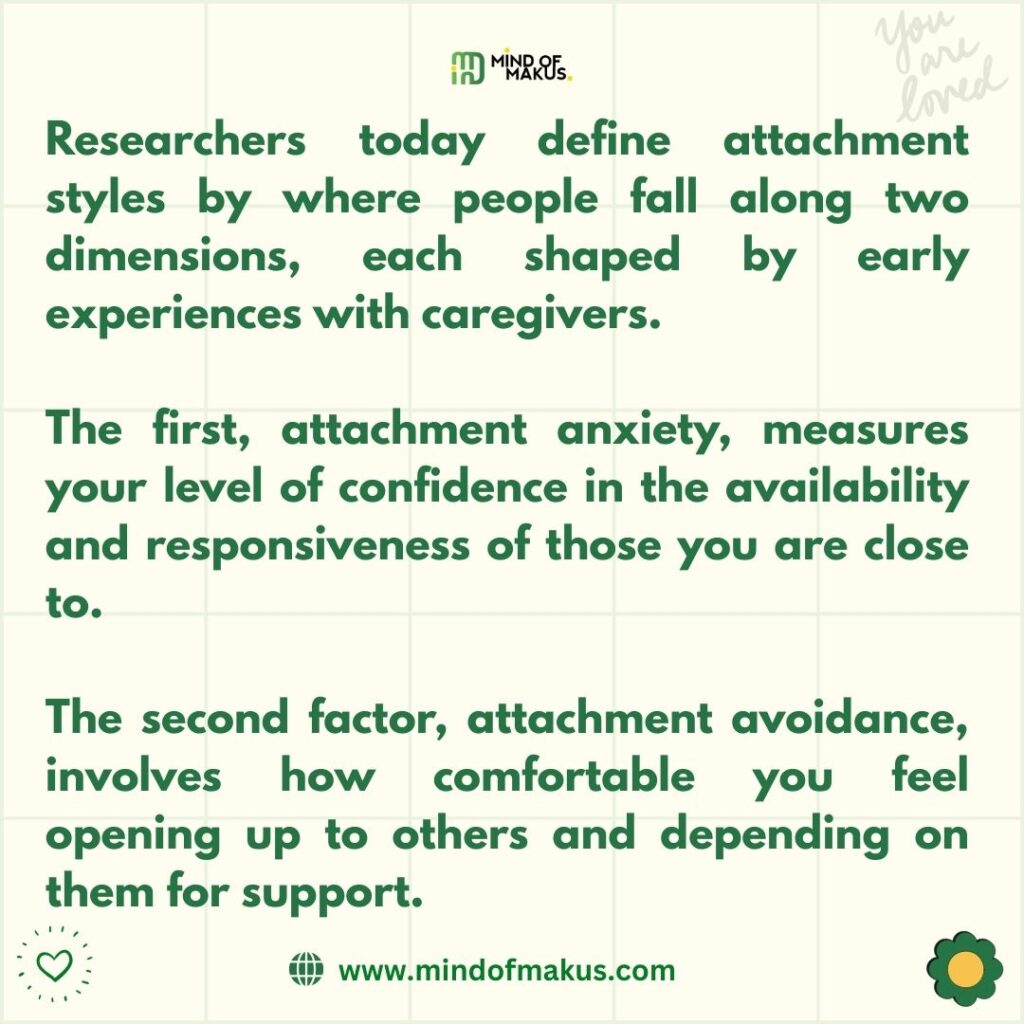
Fear of abandonment doesn’t appear out of nowhere. Our friends in psychology have found that it is often linked to early attachment experiences—how consistent, safe, or unpredictable love felt growing up.
The love of our heaven-appointed guardians, whom God gave us to, to care for us. They are not always in the best form, and most don’t understand the assignment.
“When the purpose of a thing is not known, abuse is inevitable”.
I have visions of a laptop used as a dustpan.
When our early years care was inconsistent, conditional, or suddenly withdrawn, the nervous system learned an important (but painful) lesson: Love can disappear.
Some of us were ignored until school results day, and we learnt to perform highly in school to get some much-needed attention. No wonder we perform in romantic relationships, too.
Later in life, the body remembers this. So when you love deeply, your system stays on high alert, scanning for signs of rejection—late replies, changed tone, emotional distance, you become quite good at meeting the needs of everyone but yourself.
True love starts with you; it starts with knowing who you are and how valuable you are. You cannot be fully loved by another without first knowing love by yourself through God. He first loved us.

This isn’t a drama. It’s a survival memory.
What It Can Look Like in Relationships
Fear of abandonment can quietly shape how you show up in love:
- Overthinking texts, silences, or mood changes
- Feeling anxious when you’re not reassured
- Struggling to set boundaries because you don’t want to “push them away”
- Staying longer than you should in unhealthy dynamics
- Mistaking intensity for intimacy
You may love deeply—but also feel emotionally unsafe, even with people who care about you.
The Cost
When fear leads the relationship, love can start to feel like work instead of a connection. You may shrink your needs, overextend yourself, or accept less than you deserve just to keep someone close.
You might overthink every word they say. You might cling, not because you are weak, but because the thought of losing them feels unbearable. You might stay longer than you should in a relationship that drains you, thinking your love alone could hold things together.
Over time, this can chip away at your self-worth. You start to believe love must be earned, maintained, or constantly proven—rather than received. But healthy love isn’t built on fear. It’s built on security.

Learning to Love Without Losing Yourself
Healing doesn’t mean loving less. It means loving more safely. Here’s what that journey often involves:
- Awareness: Noticing when fear, not reality, is driving your reactions. Many fear the anger of a lover or parent. Ask yourself why, stand up and look it in the face
- Emotional regulation: Learning to calm your body before seeking reassurance. Do this in calm periods so it becomes second nature when you need it. You didn’t pace or putter, pause and breathe.
- Boundaries: Understanding that saying “no” doesn’t cause abandonment—it reveals compatibility. Your “ no” can be gentle; it doesn’t always have to be aggressive and poised for a fight.
- Self-trust: Believing that even if someone leaves, you will survive and still be worthy of love. You are so worthy. When you remove the dirt, the rats and cockroaches move out. That’s normal.
Research shows that secure attachment can be learned through healthy relationships, therapy, and intentional self-work. Your past may explain your patterns, but it doesn’t have to dictate your future.
You Are Enough
If you love like this, let me tell you: you are not too much. Your heart is not broken for feeling deeply. Your desire for closeness is not a weakness. The fear is real, but it is also teachable, containable, and conquerable.
Love does not have to feel like walking on a cliff edge. It can feel like standing on solid ground with someone who meets you with the same courage, tenderness, and presence you offer.
Your love is a gift. Your fear is a guide to what needs healing. Do the work and roar in its face. Your heart deserves to rest, finally, in the warmth of love that does not run, leave, or vanish. God is love. No other love is worth dying for. He already did all the dying.
Until next time — stay warm, stay growing, stay loving, stay whole.
With love and light,
Amaka.