

Dear friend,
How are you holding up as the year edges towards its close? The lights are coming out, emails are ending with “before the holidays,” traffic seems louder, and somehow there is this unspoken pressure to be joyful, organised, generous, and available all at once.
The festive season can be beautiful, but it can also feel like a test of your nervous system.
To be honest, it’s overstimulating because it’s another whole thing on top of your already existing life duties. If you are a wife and mum, 10x that.
So pause and breathe, this is a gentle invitation to step out of the rush, even if only for a few minutes at a time, and remember that you are a person before you are a planner, giver, or host.
Your mind and body deserve a calmer Christmas, too.
There are many areas in which we tell ourselves “I have to”, “I need to”, “I can’t”. Really, do we not have any control over our own lives, or over how we participate in the activities that make up that life?
Can we pause for a moment and think about what is within our control during the holidays? So much, my dear, sooooo much!

Notice your stress signals.
The things that stress us during holiday season often shows up in small ways, we ignore these stressors, ignore opportunities to establish and enforce boundaries, moderate expectations and say a firm “No”, and shortly after they show up physically disguised as: irritability, trouble sleeping, headaches, a permanent frown in a pretty dress a tight chest when another invitation or bill arrives.
Paying attention to these early signals helps you respond with care instead of waiting until you crash.
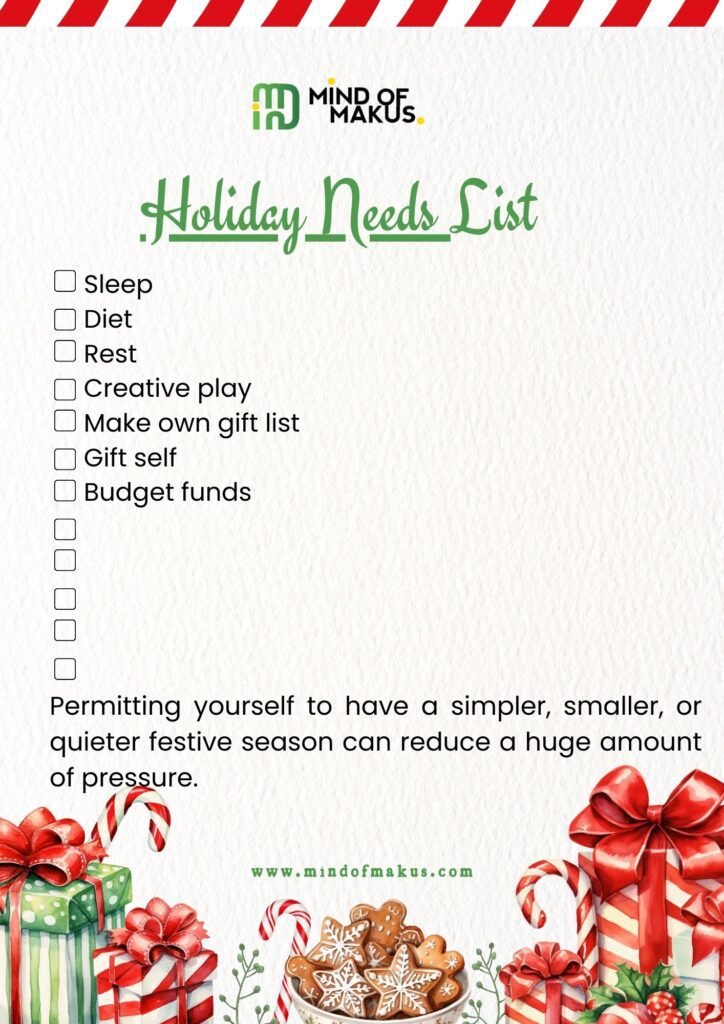
Take a quiet moment this week to ask: “Where am I feeling stretched?” Is it money, time, family expectations, or even loneliness in the middle of all the noise? Naming it is the first step to softening it. Acknowledge that you have a need.
What does this holiday mean to you?
This will differ from home to home and also from background to background. Even in the same home, people often attach a different meaning to different holidays based on their own past and present relationship with the holiday.
It’s worth checking with yourself and maybe with loved ones, what the holiday means. What is important to have in this season? What they expect from you, and what you expect from them. You would be surprised that so many things can fall off your great to-do list when you do this.
Many of us carry a mental picture of the “perfect” Christmas or holiday, shaped by films, social media, and family history. When reality doesn’t match, shame and frustration creep in.
Permitting yourself to have a simpler, smaller, or quieter festive season can reduce a huge amount of pressure. It is why the “mum” can never sit down and enjoy the dinner, and why the “dad” is so frustrated because they just had a fight in the kitchen on this special day they have blown up to Hallmark movie proportions.
Try this: write down three words you want this season to feel like (for example: calm, honest, connected). Let these words guide your decisions about what to say yes or no to, instead of trying to do everything.
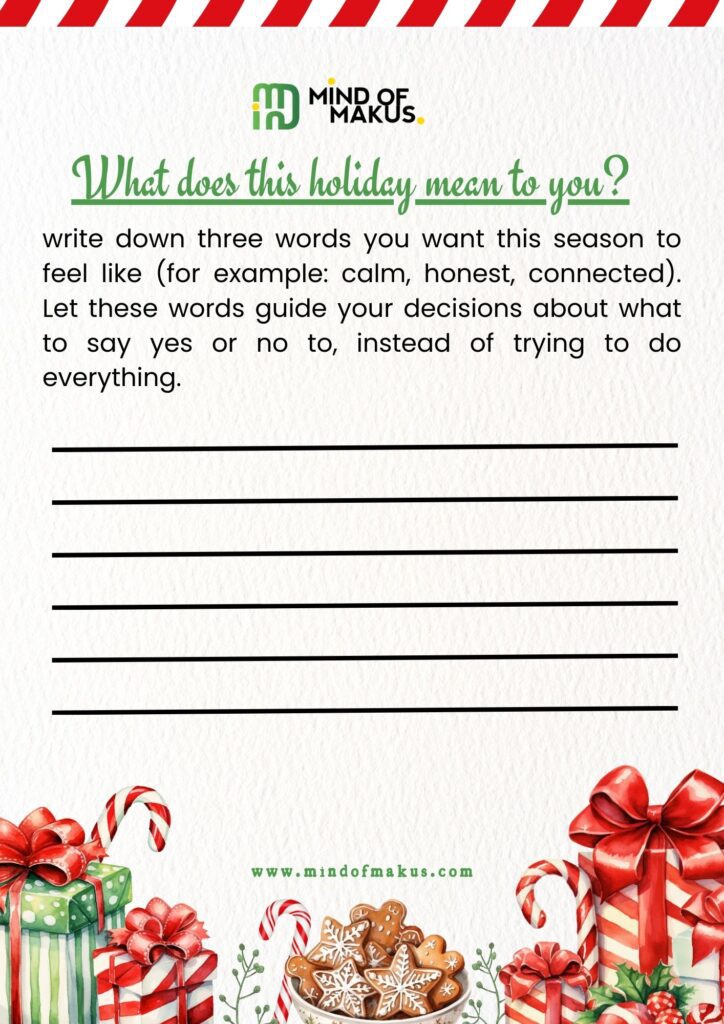
Click here to Save a print of the above document. It will help you.
Set Gentle Boundaries
Recently, my sister was planning our Christmas calendar and asked me about the events she was considering. I know my ideal Christmas isn’t activity-filled.
So I gently said, I would attend one event and be home the rest of the time, and she said she would also do the same. Can you imagine if I went along just because she offered them?
Then we would both be shackled to an overbooked holiday season that leaves us exhausted and resentful.
You are allowed to say no to what harms your peace, even if it is “tradition.” Overcommitting to events, cooking, or giving beyond your capacity often leads to resentment and exhaustion rather than joy. Healthy boundaries are an act of love towards yourself and others.
You might choose one or two gatherings to attend fully present, and politely decline the rest. You can also set spending limits in advance and communicate them clearly to family, especially around gifts and hosting. Clarity reduces conflict.
Subscribe to My Newsletter
Pockets of Calm
It is possible to actively resist and reverse the effects of stress if you are still within the window of tolerance. What sucks us into the downward spiral is is loss of control and also an unintentional obedience to the laws of stress.
To successfully reverse it, you need to execute another law, the law of peace and calm. Focusing on the things that put you in that space mentally, physically, and spiritually. No cap.
Festive stress is often about pace. Everything speeds up at once. Intentionally creating tiny pauses throughout the day helps your nervous system reset. These pauses do not have to be long or fancy to be powerful.
Simple ideas include: hosting smaller groups of people, having an advanced chat about gifting and budgets, reduced menu options for Christmas dinner, stepping outside for three slow breaths before guests arrive, drinking one cup of tea without your phone, or sitting in silence for five minutes after you wake up to pray, acknowledge negative enmiton as soon as you get them, decide quickly what you want to do with your time and energy, journal, or simply notice your breath.
These small rituals are anchors in a busy season.
Keep Spending Realistic
I learnt to moderate my spending when I went into debt after one holiday period a few years ago. I was using gifting to cope with my own annoyance at the weather, and shopping made me feel brighter, so I spent. Do not be like me.
Money worries are a major source of holiday stress, especially when there is pressure to prove love through expensive gifts or big gestures. Remember that financial strain does not make the season more meaningful; it often makes January much harder.

Set a realistic budget and stick to it, even if that means fewer or simpler gifts. Thoughtful messages, acts of service, or shared experiences can be just as meaningful as something bought last-minute in a panic. Love is not measured by the receipt.
Steward your body effectively.
Holiday stress is not just “in your head”; it shows up in your body. Late nights, rich food, alcohol, and disrupted routines can affect mood and energy. Tending to your basic physical needs is part of managing your mental health.
Try to keep a gentle rhythm: drink water, move your body in ways you enjoy, prioritise sleep where you can, and notice when you are using food, screens, or alcohol to numb rather than nourish. Small adjustments make a big difference over several weeks.
Expect mixed emotions
Not everyone experiences the holidays as purely joyful. Grief, complicated family histories, distance from loved ones, or unmet expectations can sit quietly beneath the music and decorations.
It is okay if your heart holds both gratitude and sadness at the same time. Many of us are away from loved ones, so we planned a different holiday period.
Many will also form toxic bonds just to feel a form of love, even if it’s the perverted version. Be mindful of hasty decisions influenced by emotions and alcohol.
You do not need to force cheerfulness. Instead, allow yourself to acknowledge what hurts, perhaps with a trusted friend, a therapist, or in prayer.
Honesty with yourself and with God can be deeply relieving in a season that often demands performance.
God loves you more than anyone ever can, that’s on period.
You can Support My Work
Practice simple gratitude
Every day, gently acknowledge something that has gone well, and don’t be too hard on yourself with the criticism. It is not faking your life; it does not erase stress, but it gently shifts where your attention rests.
Your attention is the currency of your mind and soul; put it where it matters. Noticing small, specific moments of goodness helps your brain see more than just what is missing or overwhelming.
Each evening, name or write down three things you are thankful for from that day: a message from a friend, a quiet car ride, a joke that made you laugh, or the strength to get through another task.
Over time, this practice can soften anxiety and create a more grounded festive experience.
Until next time — may your holidays be kinder, slower, and more honest than perfect.
Stay warm, stay growing, stay loving, stay whole.
Amaka