
Hello dear friend,
I hope you are well.
Having an exciting summer?
I have. It’s been such a beautiful week celebrating my sister.
A celebration of community, staying the course of love and light and working purposefully towards a divine goal.
This week, I have been thinking about our inner voice and what we do with it.

The Silent Conversation Within
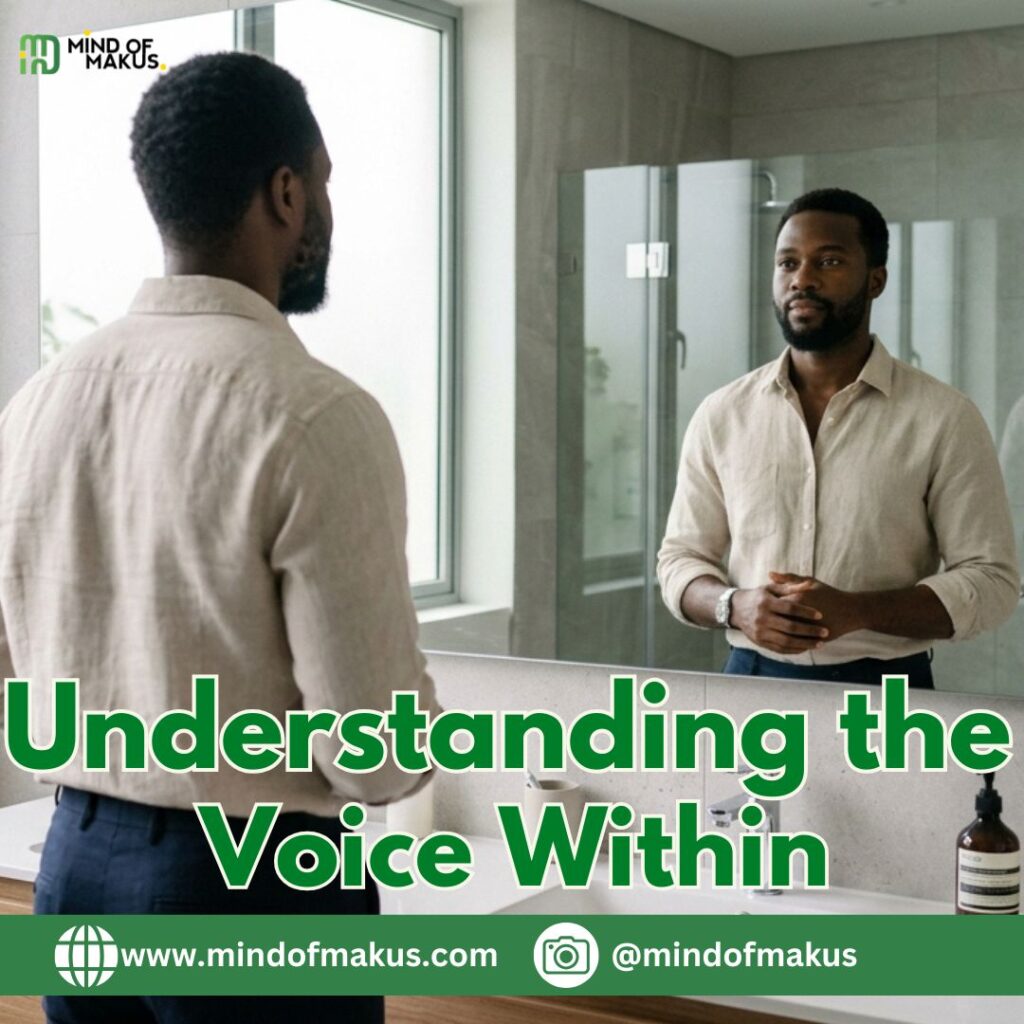
There is a conversation silently happening inside your mind right now. It may be quiet, almost unnoticed, or it may be loud enough to shape every decision you make. It is the voice that comments when you look in the mirror.
The voice that reminds you of a mistake you made years ago. The voice that tells you whether you’re capable of trying something new, or whether you should stay safely hidden.
For some, that voice is an encouraging companion, whispering, “You’ll figure it out. Keep going.” For others, it is a relentless critic: “You’re not smart enough. You’ll fail again. Why even try?”
The fascinating, and often heartbreaking, thing about this voice is that it feels like you. Because it has been with you for so long, you naturally assume it must be telling the truth.
But here is a gentle reminder you can rest in: “Your inner voice is not always your own”. It is a collection of experiences, relationships, memories, and beliefs that have accumulated over a lifetime. It has been shaped by moments both beautiful and painful.
A Moment to Breathe
- Place a hand over your heart, take a deep breath, and ask yourself without judgment:
- What has the tone of my inner voice been like today? If it were a physical person standing next to me, would I feel safe in their company?
Your Inner Voice Has a History
None of us enters the world criticizing ourselves. The Scripture beautifully reminds us in Psalm 139:14.

We are born designed for connection, wonder, and love.
As children, we learn who we are by listening to the people around us. Long before we form our own opinions, we absorb the emotional responses of others.
- The Foundation of Affirmation: Maybe someone consistently reminded you that you were capable, creative, and loved. Those words became a steady anchor.
- The Weight of Expectation: Perhaps praise was rare, while criticism was frequent. Maybe mistakes were magnified, and success was simply expected rather than celebrated.
- The Pain of Comparison: Without realizing it, repeated experiences of being compared to others slowly became your default internal dialogue.
A child who constantly hears, “Be careful, you’ll mess it up,“ often grows into an adult who hesitates before every open door. A child who only receives affection after achieving something may become an adult who implicitly believes their worth depends entirely on their productivity.
What the Research Shows
Attachment Theory shows that our early relationships create “internal working models“, essentially, mental blueprints for how we view ourselves and the world.
Furthermore, a study found that childhood emotional maltreatment or consistent verbal hostility directly predicts a harsh inner critic in adulthood. Your brain, in its brilliant desire to protect you, internalized the criticism to prepare you for external rejection.
This isn’t about assigning blame to parents or caregivers. Most people raise children while carrying unhealed wounds of their own. They pass along what they learned, often without realizing it.
Understanding your past isn’t about finding someone to blame; it’s about finding clarity. When you understand the origin of your inner voice, you stop treating it as absolute truth and begin seeing it as something that can finally be healed.
Not Every Thought Deserves to Be Believed
One of the greatest misconceptions we carry is the belief that because we thought something, it must be reality.
It isn’t. Thoughts are not facts. They are interpretations heavily influenced by current stress, exhaustion, old memories, and fear.
Consider Proverbs 4:23.

The “heart” in ancient Hebrew psychology included the mind and thoughts. We are instructed to guard it because it is highly impressionable.
Imagine someone who grew up believing they were “never enough.” Even after earning promotions, building healthy relationships, or accomplishing meaningful goals, they may still struggle with imposter syndrome.
Why? Because an old, outdated script continues to play in the background.
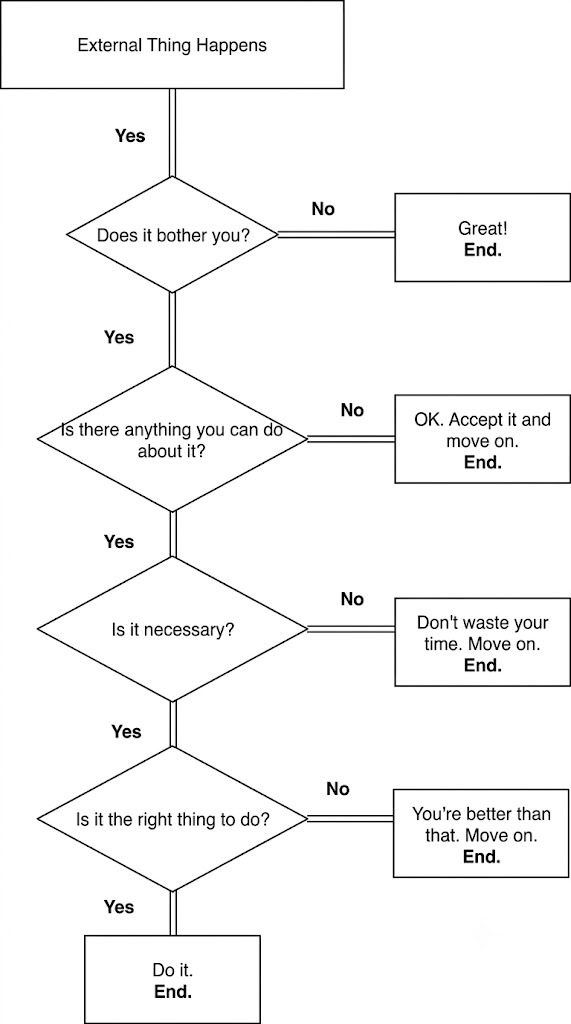
Our minds love efficiency. They create neural shortcuts based on repetition. If your brain learned early on that criticism was normal, it will continue to look for criticism, even in perfectly safe environments. This is why two people can experience the same situation and interpret it completely differently:
- Person A receives constructive feedback and thinks: “This is a gift that will help me improve.”
- Person B hears the same words and concludes: “I’m a total failure. They see right through me.“
Shifting from Criticism to Curiosity
When that critical voice rises, resist the urge to fight or argue with it. Fighting only makes it louder. Instead, invite a spirit of gentle curiosity.
The Apostle Paul gave us a beautiful framework for filtering our thoughts in Philippians 4:8, urging us to fix our minds on whatever is true, noble, right, pure, lovely, and admirable. When a heavy thought strikes, wrap it in curiosity and ask:
- “Where did this specific belief come from?”
- “When was the first time I remember feeling this way?”
- “Is this thought telling me the truth, or is it just repeating an old story?”
- “Would I ever say these exact words to someone I deeply love?”
Reflection
- Think of a specific critical thought you frequently have about yourself (e.g., “I always ruin things” or “I’m not as smart as they are”).
- Write it down. Now, write down whose voice actually reminds you of someone. Is it a teacher, a parent, an ex-partner, or a playground bully? Hand that voice back to its owner; it doesn’t belong to you.
Many people hold onto their inner critic because they fear that if they become kind to themselves, they will become lazy, complacent, or unsuccessful. They treat self-compassion like a dangerous luxury.
However, the science tells a completely different story.
The Critical Appraisals of Self-Compassion
Dr Kristin Neff, a leading pioneer in self-compassion research, has conducted numerous studies demonstrating that self-compassion is actually the ultimate engine for resilience.
- Higher Motivation: Dr Neff’s research shows that self-compassionate people are actually more motivated to correct their mistakes because they feel safe enough to admit them.
- Lower Cortisol: Brain imaging studies show that self-criticism activates our sympathetic nervous system (the “fight or flight” threat response), flooding our bodies with cortisol. Self-compassion, on the other hand, activates the mammalian caregiving system, releasing oxytocin and opiates, the hormones of safety and peace.
- Accountability: You can admit you made a mistake without deciding that “you are” the mistake.
Think about someone you genuinely love. Imagine they just failed an important interview, made a painful mistake, or disappointed themselves. Would your first response be to look them in the eye and say, “You’re useless. You always ruin everything?”
Of course not. You would sit beside them. You would acknowledge their pain. You would remind them that one bad day does not define a beautiful life.
Why does the person in your mirror deserve any less?
Crafting a New Language
Romans 12:2 invites us to: “Do not conform to the pattern of this world, but be transformed by the renewing of your mind.”
This renewal is a daily, compassionate practice. It is the holy work of learning to speak to yourself in the way your Creator speaks to you.
You can begin reshaping your internal dialogue with small, honest shifts:
Instead of: “I failed, therefore I’m a failure.”
Try: “I failed today, but I am human, and I can learn from this.”
Instead of: “I should have my life together by now.”
Try: “I am walking a unique path, and I am allowed to grow at my own pace.”
These shifts may feel small, but over time, they literally rewire your neural pathways. Healing doesn’t happen because your circumstances suddenly become perfect. It happens because the voice within becomes gentler, wiser, and more aligned with the truth of who you are.
A Final Thought
The longest, most intimate relationship you will ever have on this earth is the one you have with yourself.
Long after achievements fade, careers shift, children grow up, and seasons of life come and go, your inner voice will still be there. The question is not whether it will exist, but what kind of companion it will choose to be.
The beautiful truth is that you are not trapped by the voice you’ve always had. You can teach it a new language, one rooted in truth instead of fear and shaped by grace instead of shame.
Healing begins the moment you stop asking, “What is wrong with me?” and gently ask, “What happened to me, and what do I need right now?”
Before you close this page, take one minute to write down three things you genuinely appreciate about yourself, perhaps your resilience, your kindness, or your willingness to read this post today. Read them out loud. Let your own ears hear your own voice speaking words of kindness to your own soul. You are worthy of the grace you so freely give to the rest of the world.
Until next time — stay warm, stay growing, stay loving, stay whole.
With love and light,
Amaka.